Winter Driving Survival Kit: Essential Items for Quebec Drivers
Quebec winters don’t send warnings. One moment you’re driving through light flurries on Autoroute 40, and the next you’re watching a whiteout swallow the road ahead. When temperatures plunge to -30°C and snow piles up faster than plows can clear it, having the right emergency supplies in your vehicle isn’t just smart—it’s potentially lifesaving.
CAA-Quebec reports that roadside assistance calls can triple during severe winter storms. Many stranded drivers wait hours for help, sometimes in dangerously cold conditions. A well-stocked winter survival kit bridges that gap between breakdown and rescue.
This guide covers every essential item your vehicle needs to get through a Quebec winter safely—from basic tools to survival gear that could save your life if you’re stranded overnight.
Why Every Quebec Driver Needs a Winter Emergency Kit
Statistics tell the story: approximately 1 in 3 Canadian adults have experienced a major weather-related emergency. In Quebec, where winter stretches from November through April with temperatures regularly dropping below -20°C, the odds of encountering trouble on the road increase dramatically.
Consider what can happen in a single winter drive:
- Your battery dies in a mall parking lot at -25°C
- You slide into a snowbank on a rural road with no cell signal
- Traffic stops completely during a sudden storm, leaving you stranded for hours
- A mechanical failure leaves you waiting for a tow truck in freezing temperatures
In each scenario, having the right supplies transforms a dangerous situation into a manageable inconvenience.
The Complete Winter Survival Kit Checklist
Build your kit in three categories: tools for getting unstuck, supplies for staying warm, and items for signaling help and communicating.
Category 1: Getting Unstuck and Back on the Road
Collapsible Snow Shovel — Essential for digging out tires buried in snow. Choose a compact folding model that fits easily in your trunk. A full-size shovel won’t fit, and a child’s plastic shovel won’t cut through packed snow.
Ice Scraper and Snow Brush — You likely already have one, but keep a quality backup in your kit. Look for an extendable handle if you drive an SUV or truck. Metal scrapers work better than plastic in extreme cold.
Traction Aids — A bag of sand, non-clumping kitty litter, or commercial traction mats placed under spinning tires can provide the grip needed to escape a slippery spot. Kitty litter is lightweight and inexpensive; keep 10-15 pounds in your trunk.
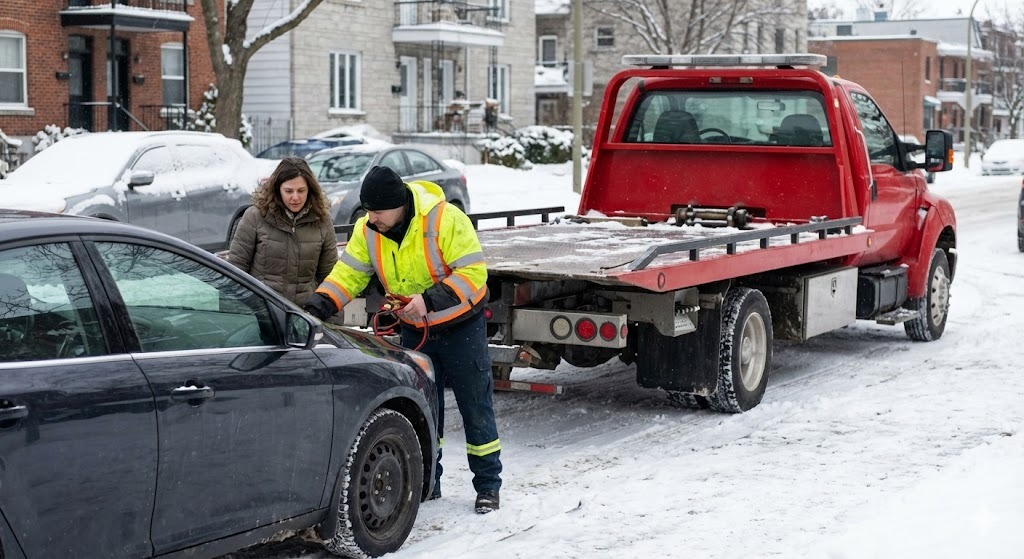
Booster Cables or Portable Jump Starter — Cold weather is brutal on batteries. At -20°C, a battery loses approximately 50% of its cranking power. Quality 8-gauge booster cables (at least 12 feet long) or a portable lithium jump starter can revive a dead battery without waiting for another vehicle. If your battery fails completely, our battery boost service responds 24/7.
Tow Strap or Rope — A 14-20 foot tow strap rated for your vehicle’s weight allows another driver to pull you free from a snowbank or ditch. Never use a bungee cord or regular rope—they can snap dangerously under tension.
Tire Pressure Gauge — Tire pressure drops approximately 1 PSI for every 5°C temperature decrease. Underinflated tires reduce traction and increase the risk of getting stuck. Check pressure before long drives.
Category 2: Staying Warm and Safe
Emergency Blankets — Keep at least one wool or fleece blanket per passenger, plus a Mylar emergency blanket. Mylar blankets reflect body heat and take up almost no space. If you’re stranded overnight, these could prevent hypothermia.
Extra Winter Clothing — Store a spare hat, insulated gloves, warm socks, and a scarf in your kit. If you leave work dressed for the office and your car breaks down, you need backup layers. Hand warmers (the disposable chemical packets) provide additional heat for hours.
Candle and Metal Container — An unscented pillar candle inside a metal coffee can creates surprising warmth in a vehicle cabin. Light the candle, and the metal radiates heat. This method conserves fuel while keeping you warm—essential if you’re stranded for hours.
Waterproof Matches or Lighter — Store in a sealed plastic bag to keep dry. Needed for the candle and potentially other emergency situations.
Category 3: Communication and Visibility
Flashlight — Choose a crank-powered or LED flashlight that doesn’t rely solely on batteries (which drain quickly in cold). A headlamp frees your hands for repairs or digging. Include extra batteries stored in an insulated bag.
Reflective Warning Triangles or Flares — If you’re stopped on a highway shoulder, visibility saves lives. Place triangles or flares behind your vehicle to alert approaching traffic. Road flares also provide light and signal distress in remote areas.
Portable Phone Charger — Your phone is your lifeline for calling roadside assistance, checking weather, and communicating with family. A fully charged power bank ensures your phone doesn’t die when you need it most. Store it in an insulated pouch—lithium batteries lose capacity in extreme cold.
Emergency Whistle — A whistle carries sound much farther than the human voice (100+ decibels vs. shouting). If you need to attract attention in a remote area, three short blasts is the universal distress signal.
Category 4: Food, Water, and First Aid
Water — Store 1-2 liters per person in reusable silicone bottles (they won’t crack when frozen like plastic can). Keep bottles insulated or wrapped in blankets to prevent freezing. Never eat snow directly—it lowers body temperature.
Non-Perishable Snacks — Granola bars, nuts, dried fruit, and energy bars provide calories and comfort. Choose items that won’t freeze solid. Rotate stock every few months to ensure freshness.
First Aid Kit — A basic kit with bandages, antiseptic wipes, gauze, medical tape, pain relievers, and any personal medications. Include a small first aid manual if you’re not trained in emergency care.
Windshield Washer Fluid — Keep an extra jug rated to -40°C. Road salt and slush quickly deplete your reservoir, and running dry on the highway creates a dangerous visibility situation.
Optional But Recommended Items
Depending on how far you drive from urban areas and your personal situation, consider adding:
- Small tool kit — Screwdriver, pliers, adjustable wrench, duct tape
- Road maps — GPS fails; paper doesn’t (Quebec road map for your region)
- Spare fuses — For your specific vehicle
- Small fire extinguisher — Rated for vehicle fires
- Pen and paper — For leaving notes or recording information
- Toilet paper — Practical for extended waits
How to Store Your Winter Kit
Organization matters when you’re stressed and cold. Pack everything in a durable bag or plastic bin that stays in your trunk all winter. Key tips:
- Keep items you might need quickly (flashlight, phone charger, booster cables) accessible
- Store water and snacks in an insulated cooler bag to delay freezing
- Check your kit monthly—replace expired food, recharge batteries, ensure nothing has been removed
- Don’t store items loose in the trunk where they’ll scatter during a sudden stop
What to Do If You’re Stranded in Winter
Having supplies is only half the equation. Knowing what to do matters equally:
- Stay with your vehicle — Your car provides shelter and makes you easier to find. Walking in a whiteout is dangerous and disorienting.
- Call for help — Contact Quebec Remorquage at 418-476-1522 for 24/7 roadside assistance, or call 911 if you’re in immediate danger.
- Make yourself visible — Turn on hazard lights, place reflective triangles, tie a bright cloth to your antenna.
- Run the engine sparingly — 10 minutes per hour provides heat while conserving fuel. Ensure the tailpipe is clear of snow to prevent carbon monoxide buildup.
- Stay awake and move — Clap your hands, move your feet, do light exercises. Movement maintains circulation and body heat.
When Your Kit Isn’t Enough: Call for Professional Help
A survival kit handles minor emergencies, but some situations require professional assistance:
- Vehicle won’t start despite jump attempts → Breakdown towing
- Stuck deeply in snow or a ditch → Winching service
- Flat tire with no spare or unsafe conditions → Tire change service
- Keys locked in vehicle → Car unlocking service
Save our number—418-476-1522—in your phone now, before you need it. Quebec Remorquage provides 24/7 emergency towing across Quebec City and surrounding areas including Limoilou, Sainte-Foy, Beauport, and beyond.
Frequently Asked Questions
What are the most important items in a winter car emergency kit?
The essentials are: warm blankets, a flashlight, booster cables or portable jump starter, a collapsible snow shovel, non-perishable food, water, a phone charger, and emergency flares or triangles. These items address the most common winter emergencies—dead batteries, getting stuck, staying warm, and signaling for help.
How often should I check my winter emergency kit?
Check your kit at least once a month during winter. Verify batteries are charged, food hasn’t expired, water bottles haven’t cracked, and nothing has been removed. At the start of each winter season, do a complete inventory and refresh supplies as needed.
Can I use a regular blanket instead of an emergency blanket?
Yes, wool or fleece blankets provide excellent insulation. However, also include a Mylar emergency blanket—it weighs almost nothing, reflects 90% of body heat, and serves as a backup. Ideally, have both.
What should I do if my car gets stuck in snow?
First, don’t spin your tires—this digs you deeper. Clear snow from around the tires and under the car. Place traction aids (sand, kitty litter, or mats) under the drive wheels. Gently accelerate while steering straight. If rocking between drive and reverse doesn’t work, call for professional winching service.
How long can you survive in a car during a winter storm?
With proper supplies and a functioning vehicle, you can survive for many hours or even overnight. Run the heater 10 minutes per hour to conserve fuel, keep the exhaust clear, stay hydrated, and keep moving to maintain circulation. Your car provides shelter from wind—the primary cause of rapid heat loss.
Be Prepared Before the Storm Hits
Building a winter survival kit takes less than an hour and costs under $150 for quality supplies. That small investment could prevent frostbite, save you from hours of misery waiting for help, or even save your life in an extreme situation.
Don’t wait for the first snowstorm to prepare. Assemble your kit this week, store it in your trunk, and drive with confidence knowing you’re ready for whatever Quebec winter throws at you.
Questions about winter roadside emergencies? Contact Quebec Remorquage—we’re here to help 24/7.