Auto Transport vs Towing: Best Way to Move a Car in Quebec
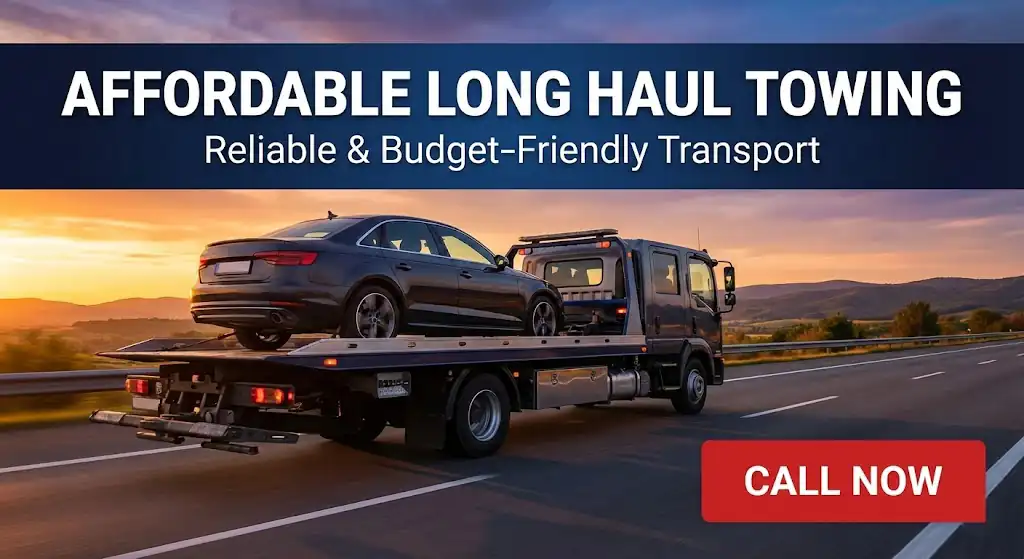
For moves under 300 km, long distance towing on a flatbed is faster, cheaper, and more convenient — your car goes door-to-door on a single truck. For moves over 500 km or inter-provincial, a multi-car auto transport carrier may cost less per kilometre but takes 3–10 days and requires terminal pickup. Between 300–500 km, either method works — the right choice depends on urgency, vehicle type, and budget.
Towing (door-to-door): $600–$1,500 | Auto transport carrier: $800–$2,000+ | Delivery: Same-day vs 3–10 days
You are moving from Quebec City to Montréal and need the second car transported. Or you bought a vehicle online from a seller in Ottawa. Or you are relocating to Moncton and cannot drive both cars. The question is not whether to move the car — it is how. Do you hire a tow truck? Book an auto transport carrier? Drive it yourself and fly back? Ship it by train?
The terms “towing” and “auto transport” are often used interchangeably — but they describe different services with different costs, timelines, and levels of care. Understanding the distinction helps you choose the method that matches your distance, budget, timeline, and vehicle type. Long distance towing is one-vehicle, door-to-door, same-day service. Auto transport is multi-vehicle, terminal-to-terminal (or door-to-door at premium), and takes days.
At Quebec Remorquage, our long-distance towing service handles vehicle moves across Quebec and beyond — same-day, door-to-door, on a dedicated flatbed. This guide compares every method so you make the right call for your situation.
→Long Distance Towing vs Auto Transport: What Is the Difference?
🚛 Long Distance Towing
- One vehicle on a dedicated flatbed
- Door-to-door — picked up and delivered to exact addresses
- Same-day or next-day delivery
- You choose the pickup and delivery time
- Flatbed only — vehicle never touches the road
- Best for: Under 500 km, urgent, high-value vehicles
🚚 Auto Transport Carrier
- 6–10 vehicles on a multi-car hauler
- Terminal-to-terminal (door-to-door costs extra)
- 3–10 business days typical delivery
- Carrier schedules the route and timing
- Open or enclosed options available
- Best for: Over 500 km, flexible timeline, budget moves
→Cost Comparison: Towing vs Transport by Distance
The cost advantage shifts depending on distance. Here is how long distance towing compares to auto transport for common Quebec routes:
*Towing prices are flat-rate estimates from Quebec Remorquage. Transport prices are market averages for open-carrier shipping. Call (418) 476-1522 for exact towing quotes. Full pricing at our towing cost guide.
The crossover point is around 400–500 km. Below that, long distance towing wins on cost, speed, and convenience. Above that, auto transport carriers gain an edge on price — but lose on speed (3–10 days vs same-day) and flexibility. For time-sensitive or high-value vehicles, towing often wins regardless of distance.
→When Long Distance Towing Is the Better Choice
Choose long distance towing when any of these apply:
- You need the car today or tomorrow. Towing delivers same-day or next-day. Auto transport takes 3–10 business days — sometimes longer during peak seasons.
- The distance is under 500 km. Towing is typically cheaper and always faster for moves within this range. Most Quebec-to-Quebec moves fall in this category.
- The vehicle does not run. A broken-down, non-starting, or accident-damaged vehicle is already on a flatbed for towing. Auto transport carriers require vehicles to be driveable for loading and unloading.
- You have a luxury, classic, or modified vehicle. A dedicated flatbed with soft straps and a single operator provides better care than a multi-car carrier where your vehicle shares space with 8 others. See our premium flatbed service.
- You want door-to-door service without extra fees. Towing goes directly from one address to another. Auto transport “door-to-door” service costs $100–$300+ extra — and “door” often means “as close as the truck can get” due to large-carrier street access limitations.
- You need flexibility on timing. Towing is scheduled at your convenience. Auto transport operates on the carrier’s route schedule — your pickup window may be a 2-day range.
→When Auto Transport Is the Better Choice
Choose auto transport when:
- The distance exceeds 500 km and time is not critical. For Quebec City to Toronto, Halifax, or further, carriers spread the cost across multiple vehicles — reducing the per-vehicle price.
- You are moving and have weeks to plan. Booking 2–4 weeks in advance locks in the best carrier rates and ensures a pickup window that aligns with your schedule.
- The vehicle runs and drives normally. Carriers need the vehicle to roll on and off the truck under its own power. If the car does not start, you need towing.
- Budget is the primary concern. On long routes, auto transport is typically 20–40% less than dedicated towing because the carrier splits costs across 6–10 vehicles.
- You want enclosed transport for an exotic. Enclosed multi-car carriers provide weather protection for very long moves — an option that dedicated flatbed towing does not offer on multi-day routes.
Same-Day Vehicle Transport Across Quebec
Door-to-door flatbed towing • Any distance • Running or non-running • 24/7
→Moving a Non-Running Vehicle Long Distance
If the vehicle does not start, does not drive, or is not road-legal, your options narrow significantly:
- Flatbed towing is the primary option. The winch loads the vehicle onto the flatbed regardless of whether it runs. No keys, no battery, no wheels — the flatbed handles it. See our guide on towing without keys.
- Auto transport carriers charge extra for non-runners. Most add $100–$300 for inoperable vehicles because loading requires a forklift or special equipment at their terminal. Some carriers refuse non-running vehicles entirely.
- Project cars and auction purchases — vehicles bought online, at auction, or from private sellers — often arrive without keys, with dead batteries, or with mechanical issues. Long distance towing handles these without any special arrangements.
- Accident-damaged vehicles may need towing from a body shop in one city to a specialist in another. Insurance may cover this — ask about our insurance towing and direct billing.
For vehicles that are beyond repair and not worth transporting, our scrap car removal may be a better option — we pay you cash and handle the logistics.
→Best Method by Vehicle Type
Different vehicles suit different transport methods. Here is a quick-reference guide:
→Hidden Costs to Watch For With Auto Transport
Auto transport quotes often look cheaper upfront — until the surcharges appear. According to the SAAQ, drivers should verify all costs before committing. Watch for these common add-ons:
- Door-to-door surcharge ($100–$300). The advertised price is often terminal-to-terminal. Getting the carrier to come to your address costs extra — and “door” may mean “nearest accessible street” for a large truck.
- Non-running vehicle surcharge ($100–$300). If your car does not start or drive, carriers charge extra for forklift loading or may decline the vehicle entirely.
- Expedited shipping premium ($200–$500). Want it faster than the standard 5–10 days? The rush fee can double the base price.
- Insurance deductible. Basic carrier insurance often has a $500–$1,000 deductible. Premium coverage that reduces this costs extra. A dedicated tow truck operator carries their own full coverage.
- Storage fees. If you are not available to receive the vehicle when it arrives at the terminal, storage fees of $25–$50/day begin immediately.
- Broker fees. Many “auto transport companies” are actually brokers who subcontract the actual move. Their margin adds 15–30% to the carrier’s price — and you lose direct communication with the driver.
⚠️ Broker Warning: Many online auto transport quotes come from brokers, not carriers. The broker collects your deposit, then shops your job to carriers — sometimes at a price below what they quoted you. If no carrier accepts, your move gets delayed or cancelled. Always ask: “Are you the carrier or a broker?” If they are a broker, ask for the carrier’s name and insurance information.
→What About Driving the Car Yourself?
The “free” option of driving the car yourself has real costs that are easy to overlook:
- Fuel: Quebec City to Montréal costs $40–$70 in gas. Quebec City to Toronto costs $120–$200+.
- Return trip: You need to get back. A one-way flight ($150–$400), bus ($50–$100), or having someone follow you in a second car all add cost and complexity.
- Wear and tear: 250–800 km of highway driving adds wear to tires, brakes, and engine — and puts kilometres on the odometer that reduce resale value.
- Time: A Quebec City to Montréal drive consumes 3 hours each way (6 hours round trip). Time has value — especially if you are taking a day off work to do it.
- Risk: Every kilometre driven is a kilometre of accident, breakdown, and road-hazard exposure. On a collector or luxury vehicle, this risk is disproportionate to the savings.
For standard vehicles on short routes (under 200 km), driving yourself is often the most practical option. For anything longer, higher-value, or non-running, professional transport pays for itself in saved time, reduced risk, and zero additional kilometres.
→Quebec Remorquage: Long Distance Towing Done Right
Every vehicle move starts with one number — (418) 476-1522:
- Long-distance towing — flat-rate pricing, any distance
- Flatbed towing — AWD, EV, luxury, classic vehicles
- Breakdown towing — non-running vehicles, any condition
- Heavy-duty towing — trucks, RVs, commercial
- Accident recovery — with insurance billing
- Dealership transport — inter-lot vehicle moves
- Scrap removal — not worth moving? We pay you
- Roadside assistance — battery boost, tire change, lockout
All services 24/7 from the Quebec City service area — Sainte-Foy, Beauport, Charlesbourg, Limoilou — to anywhere in Quebec, Ontario, and the Maritimes.
→Frequently Asked Questions
How much does long distance towing cost from Quebec City to Montréal?
A dedicated flatbed tow from Quebec City to Montréal (approximately 250 km) costs $600 to $900 depending on vehicle type and timing. The quote is a flat rate — no per-km surprises. The vehicle is picked up at your address and delivered to any address in Montréal, same day.
What is the difference between towing and auto transport?
Towing uses a dedicated truck (usually a flatbed) to carry one vehicle, door-to-door, same day. Auto transport uses a multi-car carrier hauling 6 to 10 vehicles on a shared route, typically taking 3 to 10 business days. Towing is faster and more flexible. Transport is cheaper per kilometre on long routes.
Can you tow a non-running car long distance?
Yes. Flatbed towing handles non-running vehicles without restriction. The winch loads the vehicle regardless of whether it starts, steers, or has keys. Auto transport carriers often refuse non-running vehicles or charge significant surcharges. If the vehicle does not drive, flatbed towing is typically the only practical option.
Is long distance towing available for same-day delivery?
Yes. Same-day delivery is standard for long distance towing within Quebec and to nearby destinations. Quebec City to Montréal takes approximately 3 to 4 hours including pickup and delivery. Longer routes (Quebec City to Toronto) may require next-day delivery depending on timing and distance.
Does insurance cover long distance towing?
After an accident, towing — including long distance — is typically covered under collision insurance. For voluntary moves (relocation, purchase transport), towing is not covered by auto insurance. Some credit cards include limited towing coverage. Check your policy for specific limits and exclusions.
Should I use a broker or book directly for auto transport?
Booking directly with a carrier or towing company is generally safer and more transparent. Brokers add a markup, may delay your move if no carrier accepts their price, and remove your direct communication with the driver. If you use a broker, verify the actual carrier’s name and insurance before handing over your vehicle.
Can you transport a vehicle from Quebec to another province?
Yes. Quebec Remorquage provides inter-provincial towing to Ontario, New Brunswick, Nova Scotia, Prince Edward Island, and beyond. Long-distance moves are quoted at flat rates based on the specific route and vehicle type. Call (418) 476-1522 for a quote to your destination.
Is it cheaper to tow or drive the car myself?
For short distances (under 200 km), driving is usually cheaper. For longer moves, factor in fuel, return trip costs (flight or bus), wear and tear, added kilometres on the odometer, and your time. For high-value vehicles, the risk of road damage and added mileage makes professional transport the better financial decision regardless of distance.
How far in advance should I book long distance towing?
Same-day and next-day long distance towing is available for most routes within Quebec. For inter-provincial moves, 24 to 48 hours advance notice is recommended to ensure a flatbed is available. Auto transport carriers typically need 1 to 4 weeks advance booking for the best rates and pickup windows.
What is door-to-door auto transport?
With long distance towing, door-to-door means exactly that — picked up at your address, delivered to another address. With auto transport carriers, “door-to-door” means as close as the large carrier truck can safely access — which may be a nearby commercial street, not your driveway. The carrier’s size limits access on residential streets, cul-de-sacs, and narrow roads.
Moving a Vehicle? Get a Flat-Rate Quote in 2 Minutes.
Door-to-door. Same-day. Flatbed. Running or non-running. Any distance.
Quebec City to Montréal from $600. Inter-provincial quotes available.