Emergency Fuel Delivery in Quebec: Out of Gas? We Help
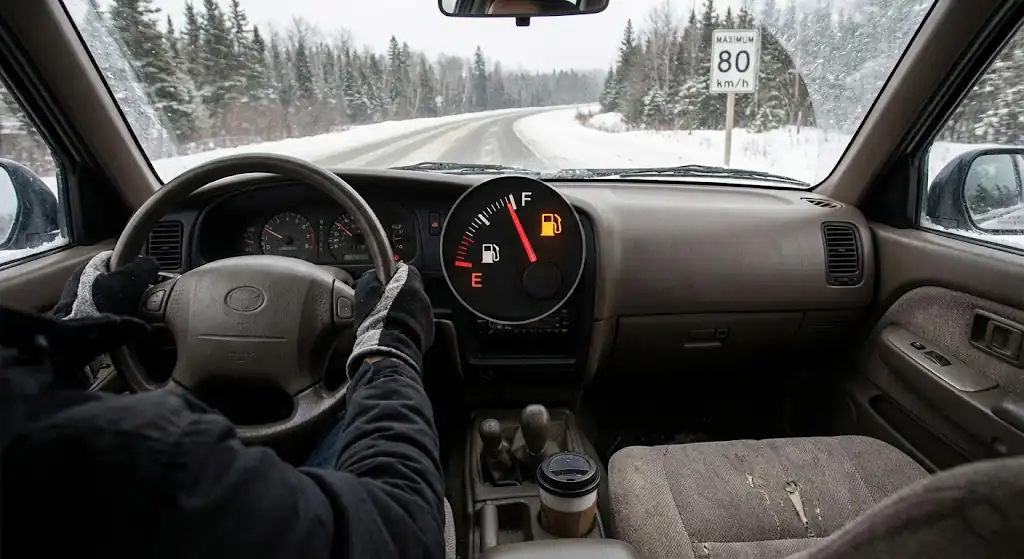
The fuel gauge has been creeping toward empty for the last 20 kilometres. You told yourself you would stop at the next station — but the next station was further than you thought. Now the engine sputters, loses power, and dies on the shoulder of Autoroute 73 south of Charlesbourg. You are out of gas, stranded, and the nearest gas station is a 45-minute walk away. In January. At -22°C.
Running out of fuel is one of the most common — and most embarrassing — roadside emergencies. But embarrassment aside, it is also genuinely dangerous on Quebec highways, especially in winter, at night, or on high-speed roads where stopped vehicles create serious hazards. You need fuel delivery, not a lecture.
Quebec Remorquage provides emergency fuel delivery as part of our complete roadside assistance service — gasoline or diesel delivered directly to your vehicle, 24 hours a day, anywhere in the Quebec City area. This guide covers exactly how fuel delivery works, what it costs, what happens when you put the wrong fuel in, and how to prevent running empty in the first place.
How Emergency Fuel Delivery Works
When you call (418) 476-1522 for fuel delivery, here is the simple process:
You call and share your location. Tell us where you are (address, highway marker, or share a GPS pin) and what type of fuel your vehicle uses — gasoline or diesel. We confirm the service and give you a price and ETA.
An operator is dispatched with fuel. Our service vehicle carries approved fuel containers with 5 to 10 litres of gasoline or diesel — enough to get you to the nearest gas station safely.
Fuel is poured into your tank. The operator adds the fuel directly to your vehicle’s tank using a proper funnel to prevent spills and contamination. The entire on-site process takes under 5 minutes.
You start your engine and drive away. The delivered fuel gives you enough range to reach the nearest gas station and fill up properly. No tow needed. No further charges.
💡 Important: Know your fuel type before you call. Most passenger cars use regular unleaded gasoline (87 octane). Diesel engines are common in pickup trucks (Ram, Ford F-250/350, GM Duramax) and some European cars (VW, BMW, Mercedes). Putting the wrong fuel type in your tank creates a far more expensive problem — see the section below.
Fuel Delivery Costs in Quebec (2026)
Fuel delivery pricing includes the service call, the operator’s time, and a small amount of fuel to get you moving. Here are typical costs for Quebec in 2026:
*Prices vary by location, time of day, and fuel type. For exact quotes, call (418) 476-1522. For all service pricing, see our complete towing and roadside cost guide.
Notice the last row — putting the wrong fuel in your tank costs three to five times more than a simple delivery. Knowing your fuel type before you call saves time and prevents a much more expensive mistake.
Why Drivers Run Out of Fuel (More Often Than You Think)
Running out of gas is not just carelessness. There are real reasons it happens to thousands of Quebec drivers every year:
⛽ Inaccurate fuel gauges. Fuel sensors degrade with age. A gauge showing 1/8 tank may actually be near empty. Older vehicles are especially unreliable — the float mechanism wears out and under-reports fuel level.
🗺️ Longer distances than expected. Rural Quebec roads between towns can stretch further than Google Maps suggests, especially with detours and construction. Gas stations in remote areas close early or seasonally.
🥶 Cold weather burns more fuel. In Quebec winters, engines burn significantly more fuel during cold starts and idling for warmth. Your range drops 15–25% in extreme cold without any change in driving habits.
🚗 Unfamiliar rental or borrowed vehicles. Driving a rental car with an unknown fuel economy and unfamiliar dashboard makes it easy to misjudge range.
🚦 Traffic and detours. Heavy traffic, construction detours, and accident-related diversions add unexpected kilometres. Stop-and-go driving on Autoroute 40 or Boulevard Laurier burns fuel much faster than highway cruising.
💡 Fuel light procrastination. The most common reason — “I will get gas on the way.” The fuel light comes on, you drive past one station, then two, then there are no more stations before your destination.
Why Running Out of Gas Is More Dangerous Than You Think
Most drivers treat running out of fuel as a minor inconvenience. In Quebec, it can be genuinely hazardous:
- Stalling on a high-speed highway is a collision risk. A stopped vehicle on Autoroute 40 or 73 is a serious hazard — especially in winter when visibility is low and stopping distances are longer. According to SAAQ safety guidelines, stopped vehicles on shoulders are involved in hundreds of secondary collisions annually.
- Power steering and power brakes stop working. When the engine dies, you lose hydraulic power assist for steering and braking. The vehicle becomes extremely difficult to manoeuvre to the shoulder safely.
- Walking along a highway is extremely dangerous. Pedestrians on Quebec highways — especially at night or in winter — face high risk from passing traffic. Staying in or near your vehicle and calling for help is always safer than walking to a gas station.
- Winter exposure is a medical risk. If you leave the vehicle to walk for fuel in -20°C weather without proper clothing, frostbite can begin within 15 minutes. Hypothermia is a real possibility.
- Running a fuel tank completely dry damages fuel system components. The fuel pump relies on gasoline for lubrication and cooling. Running it dry can overheat and damage the pump — a $400–$800 repair.
⚠️ Never walk on a highway to get fuel. It is not worth the risk. Call for fuel delivery, stay inside your vehicle with hazard lights on, and wait for help. If you need guidance while waiting, read our guide to staying safe while stranded in Quebec.
Out of Gas? Fuel Delivered to You.
24/7 emergency fuel delivery • Gasoline & diesel • From $75 • Quebec City area
Wrong Fuel in Your Tank? Here Is What to Do
Putting gasoline in a diesel vehicle (or diesel in a gasoline vehicle) happens more often than most drivers admit — especially when borrowing an unfamiliar vehicle, at unfamiliar gas stations, or when distracted. The consequences range from annoying to engine-destroying depending on how far you drive.
Gasoline in a Diesel Engine (More Serious)
Gasoline strips the lubrication that diesel fuel provides to the injection system. Running a diesel engine on gasoline — even briefly — can damage fuel injectors, the fuel pump, and the high-pressure rail. Do not start the engine. If you realize the mistake before turning the key, call immediately for a tow to a mechanic who can drain and flush the fuel system.
Diesel in a Gasoline Engine (Less Severe)
A gasoline engine may run poorly, smoke heavily, and stall on diesel fuel, but it is less likely to cause permanent damage if caught quickly. Stop driving immediately, turn off the engine, and call for a tow. The fuel system needs to be drained and refilled with the correct fuel.
In both cases, you need your vehicle towed — not fuelled. Quebec Remorquage can dispatch a flatbed tow truck to transport your vehicle safely to a mechanic for the fuel system flush.
Gasoline vs Diesel Delivery: What We Bring
Our fuel delivery service carries both gasoline and diesel. Here is what you need to know about each:
⛽ Regular Gasoline (87 Octane)
- Used by most passenger cars and SUVs
- Delivered in 5–10 litre quantities
- Enough for 40–80 km of driving
- Stored in CSA-approved containers
- Safe to add to any gasoline vehicle
🛢️ Diesel Fuel
- Used by many trucks, some SUVs, some European cars
- Delivered in 5–10 litre quantities
- Winter-grade diesel available in cold months
- Requires proper nozzle to avoid contamination
- Diesel vehicles may need fuel line priming after running dry
If you are unsure what fuel your car uses, check the fuel cap — most vehicles have the fuel type printed on or near the cap door. Your owner’s manual also lists the correct fuel type and minimum octane rating.
How to Prevent Running Out of Fuel in Quebec
Smart habits prevent the embarrassment and danger of an empty tank:
- Refuel at 1/4 tank, not when the light comes on. The fuel warning light means you have roughly 50–80 km of range — in ideal conditions. In winter, that number drops significantly.
- Fill up before long drives outside the city. Gas stations thin out quickly once you leave Quebec City toward Charlevoix, the Beauce, or northern routes.
- Account for winter fuel consumption. Expect 15–25% lower fuel economy in cold weather due to cold starts, idling, and thicker air resistance. Plan your fuel stops accordingly.
- Keep a CSA-approved jerry can in your trunk. A 5-litre approved fuel container is a lifesaver on long rural drives. Never store fuel in non-approved containers.
- Monitor your trip computer. Most modern vehicles display “range remaining” in kilometres. Use it — but remember it is an estimate based on recent driving patterns.
- Know the gas station map on your route. On Quebec’s rural highways, stations can be 30–50 km apart. Google Maps shows gas stations along your route with real-time hours.
- Do not rely on a faulty fuel gauge. If your gauge has been reading inconsistently, get it checked. A $150 sensor replacement is cheaper than repeated fuel delivery calls. Read our post-winter car checkup guide for maintenance items like this.
Fuel Delivery vs Walking vs Towing: Your Options Compared
When you run out of gas, you have three realistic options. Here is how they compare:
Fuel delivery is almost always the best option. It is faster than walking, cheaper than towing, and far safer than being a pedestrian on a Quebec highway. Towing is only necessary if the engine sustained damage from running completely dry or if wrong fuel was introduced. For towing options, see our breakdown towing and flatbed towing services.
Out of Gas Is Just One Call We Handle
Running out of fuel sometimes coincides with other issues. Quebec Remorquage’s full service lineup covers everything roadside:
- Dead battery too? Our battery boost service jumps your car in minutes
- Flat tire on top of it? Our tire change service installs your spare
- Keys locked inside? Our car unlocking service opens doors without damage
- Stuck in snow after stalling? Our winching recovery pulls you free
- Vehicle will not restart after fuelling? Our breakdown towing takes it to a mechanic
- Commercial vehicle out of diesel? Our heavy-duty towing handles trucks and equipment
Everything is available 24/7 across the Quebec City service area — including Limoilou, Sainte-Foy, and Beauport. No membership required.
Frequently Asked Questions
How much does fuel delivery cost in Quebec?
Emergency fuel delivery in the Quebec City area typically costs $75 to $150 depending on time of day, fuel type, and your location. This includes the service call and 5 to 10 litres of fuel — enough to reach the nearest gas station. Call (418) 476-1522 for exact pricing.
Do you deliver diesel fuel?
Yes. We deliver both regular gasoline and diesel fuel. When you call, specify that you need diesel so we dispatch with the correct fuel type. In winter, we carry winter-grade diesel to prevent gelling in Quebec’s extreme cold.
How much fuel do you deliver?
We deliver 5 to 10 litres of fuel per service call. This is enough to drive 40 to 80 kilometres — more than sufficient to reach the nearest gas station for a full fill-up. The goal of emergency delivery is to get you moving, not to replace a full tank.
Is fuel delivery available 24/7?
Yes. Emergency fuel delivery is available 24 hours a day, 7 days a week, including holidays. Running out of fuel on a late-night highway drive or during a weekend trip is exactly when you need this service most — and we are always available.
I put the wrong fuel in my car. Can you help?
If you put the wrong fuel in your tank, do not start the engine. Call us immediately. We will dispatch a flatbed tow truck to transport your vehicle to a mechanic who can drain and flush the fuel system. Fuel delivery cannot fix a wrong-fuel situation — the contaminated fuel must be fully removed.
What if my car will not start after adding fuel?
Running completely dry can sometimes air-lock the fuel system or damage the fuel pump. If the car does not start after fuelling, the operator can attempt a battery boost (dead battery from repeated cranking is common) or arrange a tow to your mechanic on the same service call.
Does insurance cover fuel delivery?
Some auto insurance policies and roadside assistance packages include fuel delivery coverage. Check your policy or call your insurer. Even without coverage, fuel delivery at $75 to $150 is far cheaper and safer than the alternatives — walking to a station, calling a tow, or risking fuel pump damage.
Can running out of gas damage my engine?
Yes. The electric fuel pump in most modern vehicles uses gasoline for lubrication and cooling. Running the pump dry can overheat and damage it — a repair costing $400 to $800. Diesel vehicles are especially vulnerable because air entering the fuel lines requires professional bleeding to restore operation. Avoid running your tank completely empty.
Do I need a membership for fuel delivery?
No. Quebec Remorquage provides fuel delivery to anyone who calls — no membership, no pre-registration, no app download. Just call (418) 476-1522, describe your location and fuel type, and we dispatch immediately with upfront pricing before we leave.
What if I drive an electric vehicle and run out of charge?
Fuel delivery does not apply to electric vehicles — they need a charging station, not gasoline. If your EV runs out of charge on the road, call us for a flatbed tow to the nearest charging station or your home. EVs should never be towed with the drive wheels on the ground, so our flatbed service is the safest option.
Empty Tank? Full Service. One Call Away.
24/7 emergency fuel delivery across Quebec City — gasoline and diesel.
No membership. Upfront pricing. Operator at your location in minutes.