Quebec Summer Road Trip Checklist: Avoid a Breakdown
Summer in Quebec means road trips — Charlevoix, Gaspésie, the Laurentians, Tadoussac for whale watching, Île d’Orléans for strawberries, or the long drive to the Maritimes. It also means 30°C+ heat, bumper-to-bumper traffic on Autoroute 20, construction zones that add hours to your trip, and your engine working harder than it has since last August.
Summer breakdowns are different from winter breakdowns. Instead of dead batteries and frozen fuel lines, you face overheated engines, blown tires from hot pavement, A/C-related overloads, and fuel system vapour lock. The common thread? Nearly all of them are preventable with a simple pre-trip inspection and the right roadside assistance number saved in your phone.
At Quebec Remorquage, we provide roadside assistance and breakdown towing 24/7 across the Quebec City area — including the popular routes to Charlevoix and the Laurentians. This guide is your 12-point checklist to prevent summer breakdowns, plus what to do if one happens anyway.
The 5 Most Common Summer Breakdowns in Quebec
Before the checklist — here is what goes wrong most often on Quebec summer roads, so you know what you are preventing:
🌡️ Engine Overheating
The number one summer breakdown. Hot pavement, 30°C ambient air, A/C running full blast, and stop-and-go traffic push cooling systems past their limits. Low coolant, failing water pumps, and clogged radiators are the usual culprits. Prevention cost: $30–$50 coolant check. Repair cost if ignored: $1,200–$6,000+.
💨 Tire Blowouts
Hot pavement increases tire temperature and pressure. Under-inflated, worn, or damaged tires are most vulnerable. Highway speeds amplify the failure. A tire change call costs $75–$150. Prevention cost: $0 (check pressure) or $600 (new tires). Blowout risk at highway speed: accident + tow + repairs.
🔋 Dead Batteries
Extreme heat kills batteries faster than extreme cold. Summer heat accelerates internal corrosion and fluid evaporation. A battery weakened by last winter may survive spring but fail in July. A battery boost costs $99–$150. Prevention cost: $30 test + $150 replacement.
⛽ Running Out of Fuel
Unfamiliar routes, longer-than-expected detours from construction zones, and rural Quebec stretches with 50+ km between gas stations. Running dry costs a fuel delivery call and 30+ minutes of waiting. Prevention cost: $0 (fill up at 1/4 tank).
🔧 Belt and Hose Failures
Rubber belts and hoses that survived winter may crack and fail in summer heat. A serpentine belt failure disables the power steering, A/C, alternator, and water pump simultaneously. A burst coolant hose dumps the entire cooling system in minutes. Prevention cost: $50–$100 inspection.
12-Point Pre-Trip Checklist for Quebec Summer Road Trips
Complete this checklist before every summer road trip. It takes 30 minutes in your driveway and can save you hours stranded on the highway:
Check coolant level and condition.
Coolant should be between the MIN and MAX marks on the reservoir. The colour should be bright (green, orange, or pink depending on type) — not brown, rusty, or milky. If low, top up with the correct type. If discoloured, flush before your trip. A mechanic can pressure-test the system for leaks in 15 minutes.
Inspect all four tires + the spare.
Check tire pressure with a gauge (not by eye) — inflate to the psi listed on the driver’s door sticker. Look for cracks, bulges, exposed cords, and uneven wear. Check tread depth — insert a quarter; if the caribou’s nose is fully visible, the tread is too low. Verify the spare is inflated and the jack is present.
Test the battery.
Batteries over 3 years old are at risk — especially after a harsh Quebec winter. Most auto parts stores test batteries for free. Replace any battery that tests “weak” or “marginal” before your trip — not at a rest stop in Rimouski.
Check engine oil level and change interval.
Pull the dipstick — oil should be between the marks and honey-coloured, not black. If you are due for an oil change within the next 2,000 km, do it before the trip. Long highway driving in heat stresses oil more than city commuting.
Inspect belts and hoses visually.
Open the hood and look at the serpentine belt — it should be smooth without cracks, fraying, or glazing. Squeeze coolant hoses — they should be firm, not soft, spongy, or brittle. A belt or hose that has survived winter may be one hot day from failure.
Test the A/C before departure.
Run the A/C for 10 minutes on max cold. It should blow cold air within 2–3 minutes. Weak, warm, or inconsistent cooling means the system needs a recharge or repair — and a failed A/C compressor can strain the engine belt and cause a breakdown.
Check all lights and wipers.
Headlights, tail lights, brake lights, turn signals, and hazard flashers. Summer thunderstorms reduce visibility instantly — working wipers and lights are essential. Replace worn wiper blades before the trip.
Top up all fluids.
Windshield washer fluid (summer bugs coat the windshield fast), brake fluid, power steering fluid, and transmission fluid. Low fluid levels cause system failures that lead to breakdowns.
Check brakes.
Squealing, grinding, vibration, or a soft pedal are all signs of brake wear. Mountain roads to Charlevoix and the Laurentians demand heavy braking on descents — worn brakes fade under sustained use. Have them inspected if you notice any symptoms.
Plan your fuel stops.
Map gas stations along your route — especially on rural Quebec highways where 50–80 km gaps between stations are common. Fill up at 1/4 tank, not when the light comes on. Construction detours can add 30+ km to your route unexpectedly.
Pack a summer emergency kit.
Water (2 litres minimum per person), phone charger, reflective triangles, flashlight, basic tools, first-aid kit, sunscreen, and a reflective vest. If you carry a portable jump pack, verify it is charged before departure.
Save a roadside assistance number in your phone.
Save (418) 476-1522 now — before you need it. Searching for help while stranded, stressed, and potentially overheating wastes critical time. Having the number ready means help is one tap away.
What to Do If Your Car Overheats on a Quebec Highway
Even with preparation, overheating can happen — especially in construction-zone traffic on a 32°C day. If the temperature gauge climbs into the red:
- Turn off the A/C and turn the heater to maximum. The heater pulls heat from the engine — it is uncomfortable but buys critical time.
- Pull over safely as soon as possible. Highway shoulder, exit ramp, or parking lot. Turn on hazard lights.
- Turn off the engine and pop the hood. Do not touch anything — the engine bay is dangerously hot.
- Do NOT open the radiator cap. Pressurized steam causes severe burns. Wait 30+ minutes for the engine to cool.
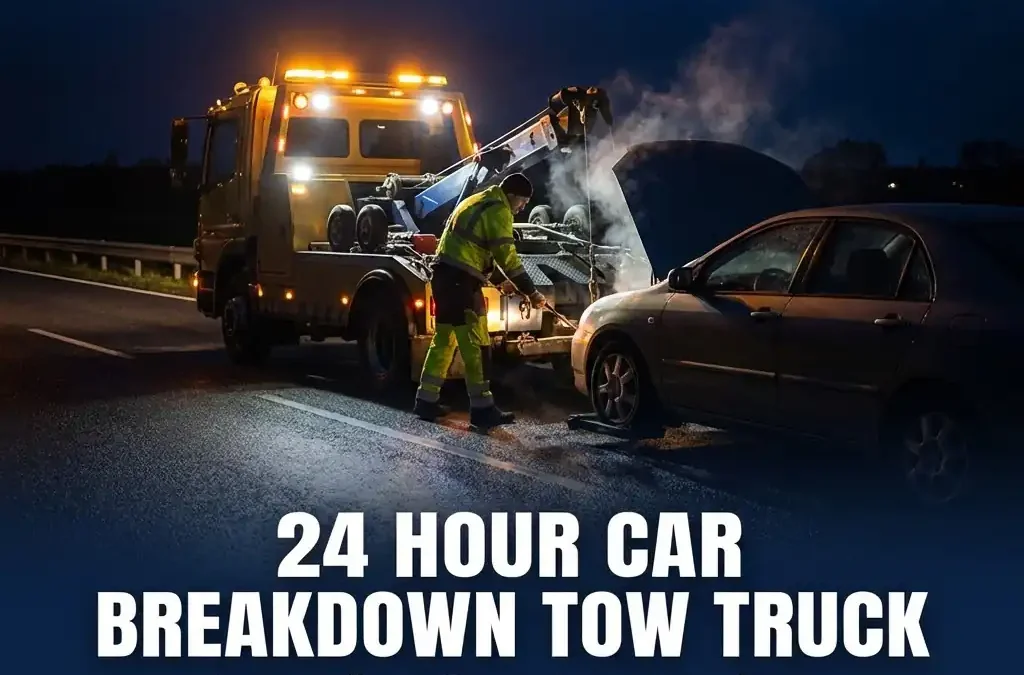
- Call for an emergency tow. Do not attempt to drive to a mechanic — even 5 more minutes of overheated driving can cause $2,000–$6,000+ in engine damage. Call (418) 476-1522 for a flatbed tow to a mechanic.
According to the SAAQ, engine overheating is among the top causes of highway breakdowns in Quebec during summer months. For a detailed overheating protocol, read our full guide on what to do while stranded in Quebec.
Quebec Construction Zones: Summer’s Hidden Breakdown Trigger
Quebec’s summer road construction is legendary — and it creates breakdown conditions that catch drivers off guard:
- Stop-and-go traffic in heat — idling in 30°C traffic with A/C running is the worst-case scenario for cooling systems. The radiator fan works overtime, the engine generates maximum heat with minimum airflow, and coolant temperatures climb.
- Rough temporary road surfaces — uneven pavement, gravel patches, and steel plates stress tires and suspension. Pothole damage is common in active construction zones.
- Extended detours drain fuel — a “15-minute delay” can add 30+ km to your route. Drivers who enter construction zones at 1/4 tank sometimes emerge needing fuel.
- Narrow lanes and barriers limit pullover options — if a breakdown happens inside a construction zone, the shoulder may not exist or may be blocked by barriers. This makes the situation more dangerous and recovery more complex.
Summer tip: Check Quebec 511 for construction reports before departure. If a major zone is expected on your route, fill the tank, check coolant, and consider leaving earlier to avoid peak traffic hours in the zone.
Break Down on Your Road Trip? We Cover All of Quebec.
Towing • Battery boost • Tire change • Fuel delivery • Winching • 24/7
Summer Tire Blowouts: Why Heat Is Your Tires’ Worst Enemy
Tire blowouts peak in summer — not winter. Hot pavement (which can reach 60°C+ on sunny days) heats the air inside tires, increasing pressure. An already over-inflated or structurally weakened tire can fail explosively at highway speeds. Here is how to prevent it:
- Check tire pressure when tires are cold (before driving or after sitting for 3+ hours). Hot tires read 3–5 psi higher than actual cold pressure, masking under-inflation.
- Do not over-inflate for highway driving. Stick to the manufacturer’s recommended psi — over-inflation makes the tire rigid and vulnerable to impact failure.
- Replace tires with less than 4/32″ tread before a highway trip. Shallow tread cannot evacuate water during summer storms, and thin tread overheats faster.
- Check tire age. Tires older than 6 years are at higher risk regardless of tread depth. The DOT code on the sidewall shows the manufacture date.
- Watch for tire pressure warning lights (TPMS). A light that comes on during highway driving often means heat has raised pressure past the threshold — or a nail has caused a slow leak. Pull over and check.
If a tire blows, grip the steering wheel firmly, ease off the accelerator (do not brake hard), and guide the vehicle to the shoulder. Call for a tire change or tow if no spare is available.
Electric Vehicle Summer Road Trips in Quebec
EVs have their own summer road trip considerations. Range is better in summer than winter (no battery heating needed), but charging infrastructure outside the Quebec City–Montréal corridor remains sparse:
- Map every charger on your route in advance. Use PlugShare or ChargeHub. Download maps offline for areas with poor cell service — rural Gaspésie and the Côte-Nord have dead zones.
- Plan for 20% range buffer. A/C in summer uses 10–15% of range. Hills, headwinds, and higher highway speeds reduce range further.
- Charge to 100% before departures from home. Unlike daily driving (where 80% is recommended for battery health), long trips benefit from a full charge.
- High ambient heat can slow DC fast charging. The battery management system may throttle charge rates to protect the battery at high temperatures — plan for longer charge stops on hot days.
- If you run out of charge, call for a flatbed tow to the nearest charger. There is no “fuel delivery” equivalent for EVs.
If You Break Down: Step-by-Step Summer Protocol
Despite the best preparation, breakdowns happen. Here is your summer-specific protocol:
- Pull over to the farthest possible point from traffic. The highway shoulder is better than the lane. A gas station or parking lot is better than the shoulder.
- Turn on hazard lights immediately. Visible from both front and rear to approaching traffic.
- Stay hydrated. Summer breakdowns in direct sunlight can cause heat exhaustion. Drink water, move to shade if available, and avoid standing on hot pavement.
- Do not leave the A/C running if the engine overheated. The A/C puts additional load on the engine. Turn off the engine entirely.
- Call for roadside assistance: (418) 476-1522. Describe the problem, share your GPS location, and wait safely.
- Stay inside the vehicle on highways with the windows cracked for ventilation if the engine is off. Standing outside near high-speed traffic is the most dangerous part of any breakdown.
For a complete safety guide, read what to do while stranded in Quebec.
Popular Quebec Summer Routes and Their Breakdown Risks
Each major summer route from Quebec City has its own breakdown profile:
- Route 138 to Charlevoix: Steep hills stress cooling systems and brakes. Beautiful scenery tempts drivers to ignore climbing temperature gauges. Limited cell service in stretches between Baie-Saint-Paul and La Malbaie.
- Autoroute 20 to Montréal: Heavy construction zones, bumper-to-bumper holiday traffic, and long stretches at highway speed. The combination of heat, A/C load, and stop-and-go traffic is the classic overheating scenario.
- Route 175 to Saguenay (Laurentians): Long stretches through Réserve faunique des Laurentides with no services. Cell coverage is spotty. Ensure a full tank and working cooling system before entering.
- Route 132 to Gaspésie: The longest common road trip from Quebec City — 700+ km. Remote sections with 50–80 km between gas stations. EV charging is sparse. Multiple mountain passes stress engines and tires.
- Île d’Orléans (Route 368): Close to Quebec City but the bridge creates a bottleneck. Overheating in bridge traffic on a hot weekend is surprisingly common. The island has limited repair services.
For any route, complete the 12-point checklist above and save (418) 476-1522 before departure. We cover the Quebec City area and major routes to Charlevoix and the Laurentians through our service area. For destinations beyond our area, we can recommend trusted operators along your route.
Every Breakdown Service for Your Quebec Road Trip
Quebec Remorquage covers every summer road trip emergency:
- Engine overheated? Breakdown towing to your mechanic
- Flat tire? Tire change — spare installed on the spot
- Dead battery? Battery boost — running in 15 minutes
- Out of fuel? Fuel delivery
- Locked keys inside? Car unlock — no damage
- Stuck off-road? Winching recovery
- AWD or EV? Flatbed towing
- Accident? Accident towing with insurance billing
Available 24/7 across the Quebec City service area — Sainte-Foy, Beauport, Charlesbourg, Limoilou, and routes to Charlevoix and the Laurentians. For choosing a provider, see our guide to reliable towing companies.
Frequently Asked Questions
What is the most common summer breakdown in Quebec?
Engine overheating is the number one summer breakdown. Hot ambient temperatures, A/C load, and stop-and-go traffic in construction zones push cooling systems past their limits. Tire blowouts from hot pavement are the second most common. Both are preventable with pre-trip inspections.
Do I need roadside assistance for a summer road trip?
You do not need a membership — but you need a number to call. Save (418) 476-1522 before departure. Quebec Remorquage provides roadside assistance on a pay-per-use basis with no annual fee. You may also have coverage through your insurance, vehicle warranty, or credit card — check before your trip.
Can summer heat kill a car battery?
Yes. Extreme heat accelerates internal corrosion and evaporates battery fluid faster than extreme cold. A battery weakened by last winter may survive spring but fail during a July heat wave. Have your battery tested before any summer road trip — most auto parts stores offer free testing.
What should I do if my car overheats in a construction zone?
Turn off the A/C immediately and turn the heater to maximum to pull heat from the engine. Try to exit the construction zone and pull over safely. If you cannot exit, put on your hazard lights and pull as far right as possible. Do not turn off the engine while still in traffic — wait until you are safely stopped. Then shut off the engine and call for a tow.
Is roadside assistance available outside Quebec City?
Quebec Remorquage covers the Quebec City metropolitan area and surrounding regions including major routes to Charlevoix and the Laurentians. For breakdowns on rural highways beyond our coverage area, call us first — we may be able to assist or recommend a trusted local operator in that area.
How do I check if my tires are safe for a road trip?
Check three things: pressure (use a gauge, inflate to the psi on the driver’s door sticker), tread depth (insert a quarter — if the caribou’s nose is fully visible, replace the tire), and condition (look for cracks, bulges, and exposed cords). Also check your spare tire — many drivers discover their spare is flat when they actually need it.
What should be in a summer car emergency kit?
Water (2 litres minimum per person), phone charger or portable battery pack, reflective triangles, flashlight, basic tools, first-aid kit, sunscreen, a reflective vest, and a portable jump pack if you own one. For comprehensive kit recommendations, see our spring checkup guide.
Can I take an EV on a Quebec summer road trip?
Yes — summer is the best season for EV road trips because warm batteries perform better. The Quebec City to Montréal corridor has excellent charging infrastructure. Routes to Gaspésie, the Côte-Nord, and remote areas have fewer chargers — plan carefully and maintain a 20% range buffer. If you run out of charge, a flatbed tow to the nearest charger is the solution.
How much does a summer roadside assistance call cost?
Battery boost starts at $99. Tire change starts at $75. Fuel delivery starts at $75. Towing starts at $125 for local distances. These are pay-per-use rates with no annual fee or membership required. After-hours surcharges of $25 to $75 apply to calls between 6 PM and 8 AM. Call (418) 476-1522 for exact pricing.
Does towing a trailer increase my breakdown risk in summer?
Yes. A trailer adds weight, which increases engine load, transmission heat, and brake wear — all amplified in summer conditions. Check trailer tire pressures, verify brake lights and turn signals, ensure the hitch is rated for the load, and monitor your transmission temperature gauge if equipped. Overheating is significantly more likely when towing in hot weather.
Road Trip Ready? Save This Number Before You Leave.
24/7 roadside assistance across Quebec City and beyond.
Towing, tire change, battery boost, fuel delivery, lockout, winching — one call covers it all.