Flatbed Towing vs Wheel Lift: Which Does Your Car Need?
⚡ Quick Answer
Flatbed towing lifts all four wheels off the ground — it is the safest option for AWD vehicles, luxury cars, damaged vehicles, and long-distance transport in Quebec. Wheel lift towing raises only two wheels and works well for short-distance, standard front-wheel-drive cars. Choosing the wrong method can destroy your transmission or cause thousands in damage.
Typical flatbed tow in Quebec: $150–$250+ | Wheel lift tow: $100–$175+
When your car breaks down in Quebec City, the type of tow truck that shows up matters more than most drivers realize. Flatbed towing and wheel lift towing are the two most common methods used across the province — and picking the wrong one can mean drivetrain damage, scratched paint, or a repair bill that dwarfs the cost of the tow itself.
Whether you drive an AWD sedan through Limoilou, a lowered sports car in Sainte-Foy, or a standard commuter through Charlesbourg, understanding the difference between these two towing methods helps you protect your vehicle — and your wallet. This guide covers how each method works, when to request one over the other, what it costs in Quebec, and how to make the right call when you are stranded.
At Quebec Remorquage, we operate both flatbed and wheel lift trucks 24/7 — and we always send the right equipment for your specific vehicle. Here is everything you need to know.
What Is Flatbed Towing?
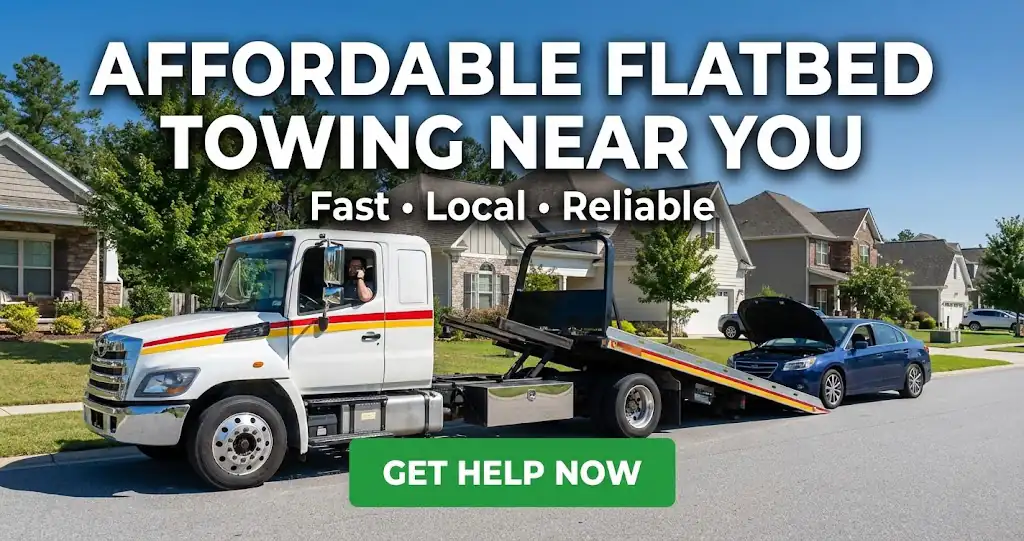
A flatbed tow truck — also called a rollback or slide carrier — uses a large, hydraulic platform that tilts down to ground level. Your vehicle is either driven onto the bed or pulled up with a winch. Once loaded, it is strapped down securely and the bed is raised back into position.
The defining feature: all four wheels are completely off the road during transport. Your car rides on the truck like cargo on a shelf. No tire contact with the road surface, no spinning drivetrain components, no exposure to potholes, debris, or Quebec’s notorious road salt.
This is why flatbed towing is the go-to method for luxury vehicles, AWD and 4WD cars, accident-damaged vehicles, and any situation where maximum protection is needed. It is also the standard for long-distance towing across Quebec.
Advantages of Flatbed Towing
- All four wheels off the ground — zero drivetrain stress
- No tire wear, no road debris contact during transport
- Safest method for damaged, non-running, or accident vehicles
- Required for AWD, 4WD, and low-clearance vehicles
- Best choice for long-distance transport (100+ km)
- Protects paint, bumpers, and undercarriage from scraping
Limitations of Flatbed Towing
- Larger truck — harder to maneuver in tight parking garages
- Loading takes slightly longer than a wheel lift hookup
- Typically costs $25–$75 more than a standard wheel lift tow
What Is Wheel Lift Towing?
Wheel lift towing uses a hydraulic metal yoke (sometimes called a stinger) that slides beneath the front or rear wheels of your vehicle. The yoke cradles the tires, and a hydraulic arm lifts that end of the car off the ground. The other two wheels remain on the road surface and roll during transport.
Which end gets lifted depends on the drivetrain. Front-wheel-drive vehicles are typically lifted from the front. Rear-wheel-drive vehicles are lifted from the rear. This prevents the powered wheels from spinning during towing, which would damage the transmission.
Wheel lift trucks evolved from the old hook-and-chain method and are far gentler than their predecessor. They work well for standard, short-distance tows when the vehicle is in reasonable condition and has a compatible drivetrain.
Advantages of Wheel Lift Towing
- Faster hookup — ideal for quick, short-distance tows
- Smaller truck fits in tight spaces (underground garages, narrow alleys)
- Lower cost than flatbed for basic local tows
- Works well for standard FWD or RWD vehicles
Limitations of Wheel Lift Towing
- Two wheels stay on the road — drivetrain stress is possible
- Not safe for AWD or 4WD vehicles without tow dollies
- Tires exposed to potholes, road debris, and salt
- Higher risk of cosmetic damage on lowered or modified vehicles
- Not recommended for distances over 30–50 km
Key Differences Between Flatbed and Wheel Lift Towing
The differences go far beyond appearance. Here is how the two methods compare across the factors that matter most to Quebec drivers:
*Costs vary by distance, time of day, vehicle type, and conditions. See our complete guide to towing costs in Quebec for detailed pricing.
When to Choose Flatbed Towing in Quebec
Request a flatbed tow truck whenever your vehicle falls into any of these categories:
AWD or 4WD vehicle — Subarus, Audis with Quattro, many crossovers and SUVs. Dragging these with two wheels on the ground destroys the transfer case and transmission. A flatbed is mandatory.
Accident-damaged vehicle — Bent axles, flat tires, or frame damage make wheel lift towing risky. A flatbed safely carries the vehicle regardless of condition. See our accident towing service.
Luxury, classic, or exotic car — If your vehicle’s value justifies maximum protection, flatbed towing eliminates virtually all transport-related risk.
Low-clearance or modified vehicle — Lowered suspensions, body kits, and wide-body modifications can catch on the road surface during wheel lift towing.
Long-distance transport — Any tow over 50 km should use a flatbed. Extended wheel lift towing causes unnecessary tire wear, drivetrain stress, and brake damage.
Motorcycles — Two-wheelers require flatbed transport with wheel chocks and soft straps. See our dedicated motorcycle towing service.
⚠️ Warning: Towing an AWD vehicle with a wheel lift — even a short distance — can cause $3,000–$8,000+ in transmission and transfer case damage. According to the SAAQ, choosing the correct towing method is the vehicle owner’s responsibility. Always confirm the method before dispatch.
When Wheel Lift Towing Works Best
Wheel lift towing is not inferior — it is simply built for different situations. It is the right choice when:
- Your vehicle is a standard front-wheel-drive sedan or compact car
- The tow distance is short (under 30 km to a nearby mechanic)
- The vehicle is in running condition or has minor issues
- Access is restricted — underground parking, narrow alleys, tight lots
- You need a fast hookup in a high-traffic area where loading time matters
- Budget is a concern and the vehicle does not require special handling
For a standard breakdown tow from Boulevard Laurier to a local Quebec City mechanic, a wheel lift is practical, safe, and more affordable.
Flatbed vs Wheel Lift: Side-by-Side Comparison
🚛 Flatbed Towing
- All 4 wheels elevated
- Zero drivetrain risk
- Ideal for AWD, luxury, damaged
- Best for 50+ km transport
- Motorcycle compatible
- Maximum vehicle protection
Best for: AWD, luxury, accident, long distance
🔧 Wheel Lift Towing
- 2 wheels stay on road
- Faster hookup time
- Great for tight access spots
- Budget-friendly option
- Best under 30 km distance
- FWD/RWD vehicles only
Best for: Short, local, standard FWD tows
How Your Vehicle Type Determines the Towing Method
Your car’s drivetrain is the single most important factor in choosing between flatbed and wheel lift towing. Get this wrong, and a simple tow becomes a major mechanical repair.
Front-Wheel Drive (FWD)
Most common in Quebec. Can be wheel-lifted from the front (powered wheels off the ground) for short distances. Flatbed is still safer for longer hauls.
Rear-Wheel Drive (RWD)
Must be lifted from the rear. If the tow company lifts the front instead, the rear driven wheels spin freely and damage the driveshaft. Flatbed eliminates this risk entirely.
All-Wheel Drive (AWD) / Four-Wheel Drive (4WD)
Flatbed towing is the only safe option. AWD systems connect all four wheels — any wheels rolling on the ground can spin the drivetrain and cause catastrophic damage. This includes popular models like the Subaru Outback, Audi Q5, and many modern crossovers.
Electric Vehicles (EVs)
Most EV manufacturers recommend flatbed towing exclusively. Dragging an EV with wheels on the ground can generate electricity through regenerative systems and damage the battery pack or motor. Always confirm your EV’s towing requirements in the owner’s manual.
💡 Pro Tip: Not sure what drivetrain your vehicle has? Check your owner’s manual, look for an “AWD” or “4WD” badge on the trunk, or tell the tow dispatcher your vehicle’s make, model, and year — they will determine the correct towing method for you.
Quebec Remorquage • 24/7 Dispatch
Flatbed & wheel lift trucks available — we send the right one for your vehicle.
Flatbed Towing Costs vs Wheel Lift Costs in Quebec
Pricing depends on distance, time of day, vehicle type, and road conditions. Here are typical ranges Quebec drivers can expect in 2026:
At Quebec Remorquage, we provide upfront quotes before dispatching — you know the exact cost before a truck rolls. Call (418) 476-1522 for a free quote based on your vehicle and location. For a full breakdown of what affects pricing, read our guide to towing costs in Quebec.
Why Quebec’s Roads Make Flatbed Towing Essential
Quebec’s road conditions are among the most challenging in Canada — and that directly impacts which towing method protects your vehicle best.
Potholes: Quebec’s freeze-thaw cycles create some of the worst potholes in the country. With wheel lift towing, the two rolling wheels absorb every impact. A flatbed eliminates this risk completely since your tires never touch the road.
Road salt and debris: From November through April, Quebec roads are saturated with salt, gravel, and sand. Wheel lift towing drags your rolling tires through all of it. Flatbed transport keeps your entire vehicle elevated and protected.
Winter conditions: Snow-packed and icy roads make wheel lift towing riskier. Two wheels on a slippery surface behind a tow truck creates fishtailing potential. A flatbed eliminates this safety concern entirely, which is why our 24/7 emergency towing fleet includes multiple flatbed trucks year-round.
Autoroute speeds: On Autoroute 20, 40, and 73, towed vehicles behind wheel lifts are exposed to high-speed road hazards. Flatbed towing at highway speeds is significantly safer for both the towed vehicle and surrounding traffic.
How to Request the Right Tow Truck in Quebec
When you call for a tow, having the right information ready ensures the correct truck is dispatched the first time. A reputable towing company will ask you:
- Vehicle make, model, and year — this tells them the drivetrain type
- Your exact location — street address, landmark, or highway marker
- What happened — breakdown, accident, stuck, locked out, etc.
- Vehicle condition — can it roll? Are tires flat? Is there visible damage?
- Destination — preferred mechanic, dealership, or home
💡 Pro Tip: If you are unsure whether you need a flatbed or wheel lift, simply tell the dispatcher your vehicle’s make and model. At Quebec Remorquage, we always send the correct equipment for your specific vehicle — you never need to worry about the wrong truck showing up.
Our dispatchers know Quebec’s streets, traffic patterns, and every neighbourhood we serve. We will match the right truck to your vehicle type, your location, and the towing distance — every time.
Common Mistakes When Choosing a Towing Method
Drivers frequently make these errors — each one can lead to preventable damage and added expense:
- Assuming all tow trucks are the same — They are not. The equipment matters as much as the operator.
- Choosing the cheapest option regardless of vehicle type — Saving $50 on a wheel lift tow can cause $5,000 in transmission damage to an AWD vehicle.
- Not knowing your vehicle’s drivetrain — Many drivers are unaware their crossover or SUV is AWD.
- Accepting a wheel lift for a post-accident tow — Damaged vehicles often have hidden issues (bent axles, loose parts) that make flatbed the only safe option.
- Letting an unlicensed operator choose the method — Always use a professional towing service that asks the right questions before dispatching.
⚠️ Important: If a towing company refuses to tell you which truck type they are sending, or says “it doesn’t matter” — that is a red flag. A professional operator always matches equipment to the vehicle. Quebec Remorquage confirms the truck type, provides upfront pricing, and sends real-time ETAs via text.
When You Might Not Need a Tow at All
Not every roadside problem requires towing — flatbed or otherwise. Before requesting a tow truck, consider whether one of these services solves the issue faster and cheaper:
- Dead battery? A battery boost starting at $99 can get you running in minutes.
- Flat tire with a spare? Our tire change service installs your spare on the spot.
- Locked out? Our car unlocking service opens your door without towing.
- Stuck in snow? A winch-out recovery pulls you free without transporting the vehicle.
- Need heavy equipment moved? Our heavy-duty towing handles trucks, buses, and RVs with specialized wreckers and rotators.
Our roadside assistance team can diagnose the issue over the phone and recommend the most efficient solution — no membership required.
Frequently Asked Questions
Is flatbed towing safer than wheel lift towing?
Yes. Flatbed towing is the safest method because all four wheels are off the ground, eliminating drivetrain stress, tire wear, and road hazard exposure. It is the recommended method for AWD vehicles, luxury cars, damaged vehicles, and any tow over 50 km in Quebec.
Can you wheel lift tow an AWD vehicle?
Only if tow dollies are placed under the remaining wheels so all four are off the ground. Without dollies, wheel lift towing an AWD vehicle — even a short distance — can cause severe transmission and transfer case damage costing thousands of dollars. A flatbed is the much safer and simpler solution.
How much does flatbed towing cost in Quebec?
A standard local flatbed tow in Quebec City typically ranges from $150 to $250, depending on distance and time of day. Long-distance flatbed tows (50+ km) start around $350 and increase based on the route. Quebec Remorquage provides exact quotes before dispatching — call (418) 476-1522 for current pricing.
Does flatbed towing cost more than wheel lift?
Typically $25 to $75 more for a comparable distance. The additional cost reflects the specialized equipment, longer loading time, and superior vehicle protection. For AWD, luxury, or damaged vehicles, the extra cost is a fraction of what improper towing would cost in repairs.
Which towing method is best for electric vehicles?
Flatbed towing. Most EV manufacturers — including Tesla, Chevrolet, and Hyundai — require flatbed transport. Dragging an EV with wheels on the ground can damage the electric motor and battery system through unintended regenerative charging. Always check your owner’s manual and request a flatbed.
Is wheel lift towing bad for your car?
Not when used correctly. For a compatible vehicle (standard FWD or RWD) over a short distance, wheel lift towing is perfectly safe. Problems arise when it is used on the wrong vehicle type (AWD), over excessive distances, or by operators who lift the wrong end of the car.
Do I need a flatbed tow truck for a motorcycle?
Yes. Motorcycles cannot be wheel-lifted and must be transported on a flatbed equipped with wheel chocks and soft straps. Quebec Remorquage provides specialized motorcycle towing with flatbed trucks designed to secure bikes of all sizes — from scooters to heavy touring motorcycles.
Can I request a specific tow truck type when I call?
Absolutely. You always have the right to request a flatbed or wheel lift truck. A professional towing company will honour your preference or explain why a different method is needed for your specific situation. At Quebec Remorquage, simply tell our dispatcher what you prefer.
Does insurance cover flatbed towing in Quebec?
Most auto insurance policies in Quebec cover towing after an accident, and flatbed service is typically included when it is required for your vehicle type. Quebec Remorquage works directly with major insurance providers and can bill your insurer directly in many cases. Check your policy or ask our dispatcher for details.
What is hook-and-chain towing, and is it still used?
Hook-and-chain towing wraps chains around the vehicle frame and drags it with one end on the ground. It is largely obsolete for modern vehicles because it causes significant body and frame damage. It is occasionally used for junk car removal or salvage operations where the vehicle’s condition is irrelevant. Quebec Remorquage does not use this method on any driveable or repairable vehicle.
Need a Tow? We Send the Right Truck — Every Time.
Flatbed and wheel lift trucks available 24/7 across Quebec City.
Upfront pricing. Real-time ETAs. No wrong equipment.