24/7 Emergency Towing in Quebec: What to Expect When You Call
Your car just died on Boulevard Laurier at 11 PM. The engine won’t turn over, traffic is honking, and you’ve never called a tow truck before. What happens next? How long will you wait? What will it cost?
Understanding the emergency towing process before you need it removes stress from an already difficult situation. This guide walks you through exactly what happens from the moment you dial for help until your vehicle arrives safely at its destination.
Step 1: Making the Call
When you call Quebec Remorquage or any professional towing service, a dispatcher will ask specific questions to send the right help quickly:
Your exact location — Be as specific as possible. Street address is ideal; if you’re on a highway, note the nearest exit, kilometer marker, or landmark. “Eastbound Autoroute 40, about 2 km past the Henri-IV exit” helps dispatchers locate you faster than “somewhere on the highway.”
Your vehicle information — Make, model, color, and license plate. This helps the tow truck driver identify your vehicle quickly, especially if multiple cars are stopped in an area.
What happened — Did the car break down, were you in an accident, are you stuck in snow, or locked out? Different situations require different equipment and expertise.
Your current situation — Are you in a safe location? Are there passengers, children, or pets? Is traffic flowing around you safely? This helps prioritize your call appropriately.
Where you want the vehicle towed — Your home, a specific mechanic, or the nearest repair shop. If you’re unsure, the dispatcher can suggest trusted options in your area.
Step 2: Getting a Quote and ETA
Reputable towing companies provide pricing information upfront—before dispatching a truck. At Quebec Remorquage, we quote the total cost based on:
- Base hookup fee (covers arrival, loading, and securing)
- Per-kilometer rate for transport distance
- Any special equipment needed (flatbed, winching, etc.)
- Time of service (some companies charge after-hours fees)
You’ll also receive an estimated time of arrival (ETA). Modern towing services send this via text along with a tracking link so you can see exactly when your driver will arrive. Typical response times in Quebec City range from 20-45 minutes depending on location, traffic, and weather conditions.
Step 3: While You Wait
Safety is paramount while waiting for a tow truck:
If you can move the vehicle — Pull as far off the road as safely possible. A parking lot, side street, or wide shoulder is ideal. The further from traffic, the safer for you and the tow truck operator.
If you cannot move the vehicle — Turn on hazard lights immediately. If you have reflective triangles or flares, place them behind your vehicle (50-100 meters back on highways). Stay inside your car with seatbelt fastened unless it’s safer to exit and stand well away from traffic.
In winter conditions — Run your engine for 10 minutes per hour to stay warm, but ensure the exhaust pipe isn’t blocked by snow. Keep a window cracked slightly to prevent carbon monoxide buildup.
At night — Keep interior lights off to preserve battery and maintain night vision, but leave hazard lights on. If someone approaches and you feel unsafe, stay in your locked car and call 911.
Step 4: When the Tow Truck Arrives
A professional tow truck operator will:
- Assess the situation — They’ll confirm your vehicle’s condition, the safest loading method, and the destination.
- Confirm the price — Before any work begins, the operator should confirm the quoted price. Never accept service without understanding the cost.
- Choose the right towing method — Depending on your vehicle type and condition:
- Flatbed towing for AWD vehicles, luxury cars, or severely damaged vehicles
- Wheel-lift towing for standard front-wheel or rear-wheel drive vehicles
- Winching if the vehicle is stuck in snow, a ditch, or off-road
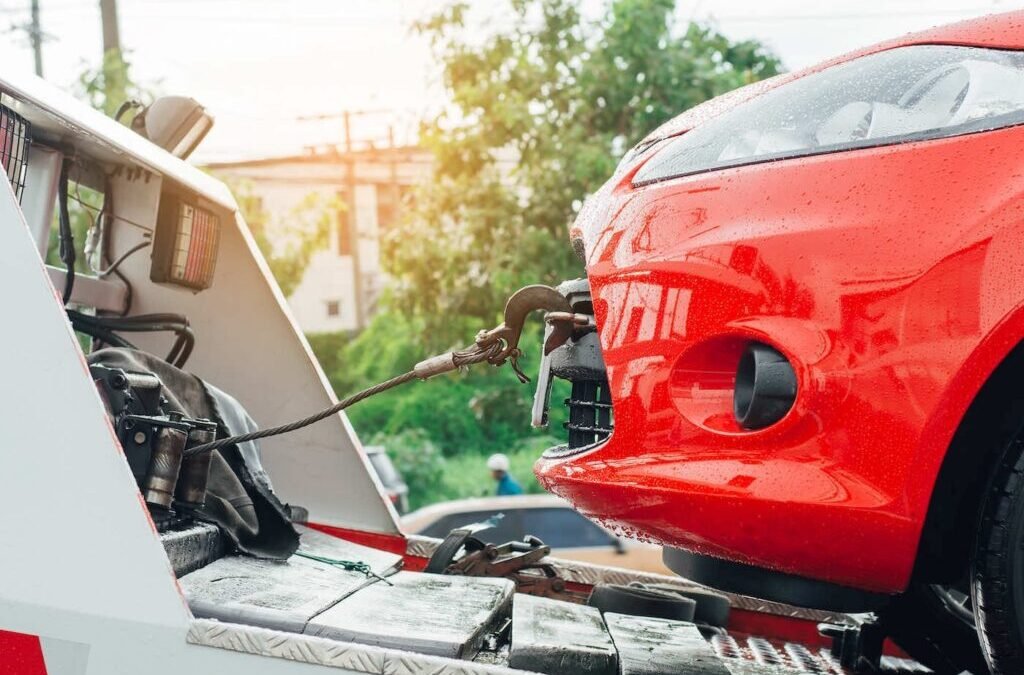
- Secure your vehicle properly — Using straps, chains, or wheel nets to prevent movement during transport. A professional takes time to secure properly—rushing this step risks damage.
Step 5: During Transport
You have options for how you get to the destination:
Ride with the tow truck — Most towing companies allow one passenger in the cab. This is often the most practical option, especially if you’re being towed to a nearby location.
Arrange separate transportation — If you have multiple passengers, call a rideshare or have someone pick you up. Some situations (like accident scenes with police involvement) may require you to stay on scene initially.
What you cannot do — Never ride inside the vehicle being towed. This is unsafe and illegal in Quebec.
Step 6: Arrival and Payment
When you arrive at the destination:
- The operator will safely unload your vehicle
- You’ll receive an itemized receipt showing all charges
- Payment is typically due at time of service (cash, credit card, or debit accepted by most companies)
- For insurance-covered tows, the company may bill your insurer directly
Keep your receipt—you’ll need it for insurance claims or if the breakdown was caused by a defect covered under warranty.
Common Emergency Towing Scenarios in Quebec
Breakdown on the Highway
Highway breakdowns require quick response due to safety concerns. Tow trucks dispatched to Autoroute 20, 40, or 73 prioritize safe loading in high-speed traffic areas. Expect the driver to position the truck to protect both of you from passing traffic.
Accident Recovery
After an accident, accident towing involves more than just transport. Services may include debris cleanup, fluid containment, and coordination with police and insurance. Most insurers cover accident towing, and reputable companies handle the paperwork directly.
Dead Battery That Won’t Boost
Sometimes a battery boost isn’t enough—the battery may be completely dead or there’s an underlying electrical problem. In these cases, towing to a mechanic is the next step. Many towing services (including Quebec Remorquage) apply the boost service fee toward the tow if boosting doesn’t work.
Stuck in Snow or a Ditch
Winching services extract vehicles from snow, mud, ditches, or embankments. This requires specialized equipment and experience to avoid damage. Never let an untrained person attempt to pull you out with a personal vehicle—improper technique causes accidents and vehicle damage.
Locked Out
If you’re locked out with no other option, towing companies often provide car unlocking services as part of roadside assistance. A technician can open your door without towing the vehicle at all.
How Much Does Emergency Towing Cost in Quebec?
Towing costs vary based on several factors:
- Base/hookup fee: $75-$150 typically covers arrival and loading
- Per-kilometer rate: $3-$5 per km for transport distance
- After-hours or holiday service: May include modest additional fees
- Special equipment: Flatbed, heavy-duty, or winching services may cost more
At Quebec Remorquage, our pricing is transparent—you receive a complete quote before we dispatch. No surprises, no hidden fees. Standard breakdown towing typically starts around $150 including hookup and reasonable transport distance.
What to Look for in an Emergency Towing Service
Not all towing companies are equal. When choosing a service—ideally before you need one—look for:
- True 24/7 availability: Some companies advertise 24/7 but have limited overnight coverage
- Transparent pricing: Quotes provided before dispatch, not after arrival
- Real-time tracking: Text updates with ETA and driver location
- Proper equipment: Flatbeds, wheel-lifts, and winches for different situations
- Licensed and insured: Protects you if damage occurs during towing
- Local knowledge: Drivers who know Quebec’s streets and traffic patterns
Frequently Asked Questions
How long does it take for a tow truck to arrive?
In Quebec City and surrounding areas, typical response times are 20-45 minutes under normal conditions. Severe weather, heavy traffic, or remote locations may extend this. Reputable companies provide accurate ETAs and update you if delays occur.
Can I choose where my car gets towed?
Absolutely. You decide the destination—your preferred mechanic, dealership, home, or a repair shop. If you’re unsure, the towing company can recommend trusted options in your area.
What if I can’t afford to pay right away?
Most towing companies require payment at time of service. However, if you have roadside assistance through your insurance or an auto club membership, the service may be covered or partially reimbursed. Check your policy before calling.
Will towing damage my car?
Professional towing by a reputable company should not damage your vehicle. Proper equipment selection (flatbed vs. wheel-lift) and secure loading techniques protect your car. Always use a licensed, insured towing service—you’re protected if damage does occur.
Do I need to be present when the tow truck arrives?
Ideally, yes. You’ll need to provide keys, confirm the destination, sign paperwork, and handle payment. In some situations (like if you’ve already been transported from an accident), arrangements can be made for key handoff and payment.
Save This Number Before You Need It
The worst time to search for a towing company is when you’re stranded on the side of the road at night in winter. Save Quebec Remorquage’s number now: 418-476-1522.
We provide 24/7 emergency towing across Quebec City, Limoilou, Beauport, Charlesbourg, Sainte-Foy, and surrounding areas. Fast response, transparent pricing, and professional service—every call, every time.