In this guide, you’ll learn how to assess whether a winter tire change is safe to do yourself, get step-by-step instructions for changing a tire in cold weather, and understand exactly when you should call for professional emergency tire change service instead.
Should You Change Your Own Tire in Winter?
The decision to change your tire yourself or call for help depends on several factors. Winter adds complexity and danger that doesn’t exist in warmer months.
When It’s Safe to Change Your Tire Yourself
You can safely attempt a DIY tire change in winter if all of these conditions are met:
- Safe location: You’re in a well-lit parking lot, driveway, or wide shoulder completely away from traffic
- Proper equipment: You have a functional spare, jack, lug wrench, and wheel chocks
- Stable ground: The surface is level, paved, and not covered in deep snow or ice
- Reasonable weather: Temperatures are above -15°C and conditions aren’t dangerous (no blizzard, freezing rain, or whiteout)
- Adequate clothing: You have warm winter gear to work outside for 20-30 minutes
- Physical ability: You’re capable of the physical demands without medical concerns
- Experience: You’ve changed tires before and feel confident in your abilities
- Daylight or good lighting: You can see clearly what you’re doing
If even one of these conditions isn’t met, seriously consider calling for professional help instead.
When You MUST Call for Professional Help
Don’t attempt a tire change yourself if any of these situations apply:
- Highway or busy road: You’re on a highway shoulder, bridge, or road with active traffic—extremely dangerous
- Dangerous weather: Temperatures below -20°C, active snowstorm, freezing rain, or poor visibility
- Unsafe ground: Steep incline, unstable shoulder, deep snow, or ice-covered surface
- Missing equipment: No spare, broken jack, missing lug wrench, or flat spare tire
- Physical limitations: Medical conditions, injury, or pregnancy that make the work unsafe
- Frozen lug nuts: Lug nuts won’t budge due to corrosion, over-torquing, or freezing
- Damaged wheel studs: Visible damage to the wheel assembly
- Nighttime without good lighting: Can’t see properly to work safely
- Alone in isolated area: No cell service, no nearby help, rural location in extreme cold
- Time-sensitive situation: Medical emergency, important appointment, or urgent need to move
Quebec Remorquage provides fast 24/7 tire change service across Quebec. We’ll come to your location, change your tire safely, and get you back on the road—no matter the weather. Call (418) 476-1522 if you’re in any of these situations.
Winter-Specific Tire Change Challenges
Changing a tire in Quebec winters presents unique challenges you won’t face in summer:
Frozen and Corroded Lug Nuts
Winter road salt corrodes lug nuts, and cold temperatures contract metal, making lug nuts extremely difficult or impossible to loosen. Over-torquing from previous changes makes this worse. Frozen lug nuts can round off, requiring specialized tools to remove.
Ice and Snow-Covered Ground
Jacks need stable, level surfaces. Snow, ice, and frozen ground create unstable conditions where jacks can slip, potentially causing serious injury or vehicle damage. Even paved surfaces can be deceptively slippery.
Extreme Cold Effects on Tools and Materials
Cold metal tools become brittle and uncomfortable to handle. Rubber spare tires lose pressure in cold weather. Hydraulic jacks work sluggishly in extreme cold. Your hands lose dexterity quickly in freezing temperatures, making precise work difficult and dangerous.
Limited Visibility and Shorter Daylight
Quebec winter days are short—sunset arrives around 4:30 PM in January and February. Flat tires that happen during evening commutes leave you working in darkness. Snow and wind reduce visibility even during daylight hours.
Risk of Hypothermia and Frostbite
Working outside in -20°C temperatures for 20-30 minutes risks frostbite and hypothermia, especially if you’re not dressed properly. Wind chill makes conditions even more dangerous. These aren’t minor inconveniences—they’re serious health risks.
How to Change a Flat Tire in Winter (Step-by-Step)
If you’ve determined it’s safe to proceed, follow these steps carefully. If at any point conditions become unsafe or you encounter problems, stop and call for help at (418) 476-1522.
Step 1: Get to a Safe Location
Turn on your hazard lights immediately. If you’re on a highway or busy road, get as far off the road as possible—ideally behind a guardrail or in a parking lot. If you can’t reach a safe location, don’t attempt the change yourself—call for professional service.
Set up reflective triangles or flares 50-100 feet behind your vehicle to warn approaching traffic. Put on a high-visibility vest if you have one.
Step 2: Prepare Your Work Area
Clear snow and ice from around the flat tire using a shovel, brush, or your feet. You need clear access to the tire, wheel well, and jacking points. Clear snow from under your vehicle where you’ll place the jack.
If possible, place a piece of plywood, thick cardboard, or a rubber mat under the jack for stability on snow or ice. This prevents the jack from sinking or slipping.
Step 3: Gather Your Tools
You’ll need:
- Spare tire (check that it’s properly inflated)
- Jack (ensure it’s rated for your vehicle’s weight)
- Lug wrench or tire iron
- Wheel chocks or large rocks to prevent rolling
- Work gloves (preferably insulated for winter)
- Flashlight or headlamp if visibility is poor
- Owner’s manual for jacking point locations
Step 4: Secure the Vehicle
Put the vehicle in Park (automatic) or first gear (manual). Engage the parking brake firmly. Place wheel chocks or large rocks behind the tires diagonal from the flat (if the right front is flat, chock the left rear).
This prevents the vehicle from rolling while you work—critical on icy surfaces where parking brakes alone may not hold.
Step 5: Loosen Lug Nuts BEFORE Jacking
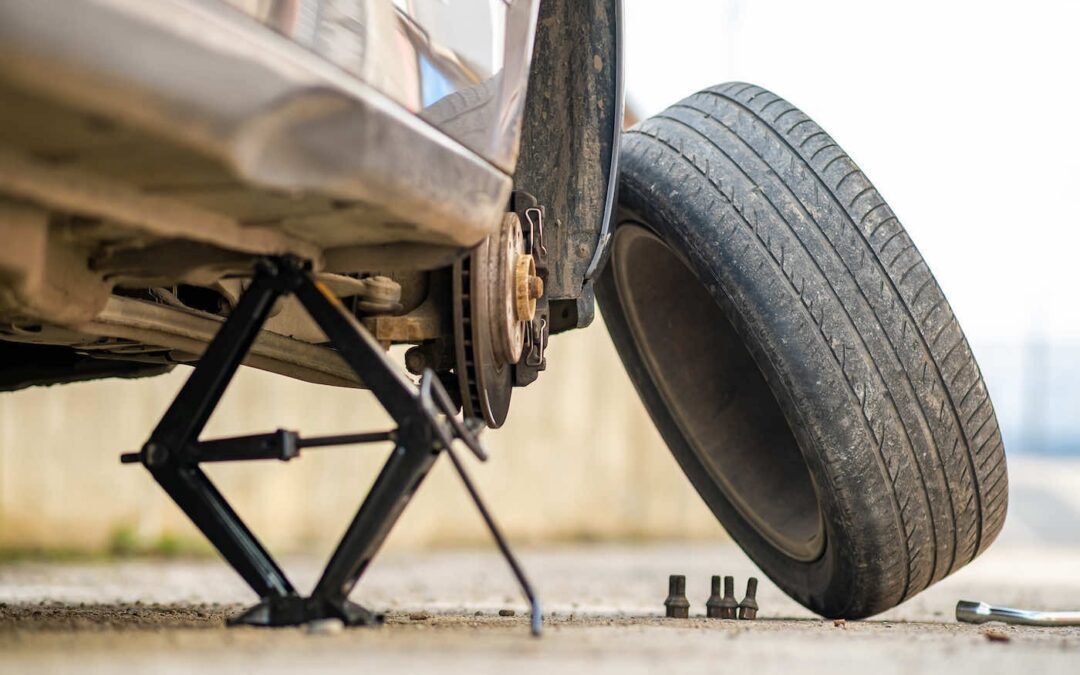
This is critical—loosen lug nuts while the tire is still on the ground. Once the vehicle is jacked up, the wheel will spin freely, making it impossible to loosen tight nuts.
Turn each lug nut counterclockwise (lefty-loosey) about half a turn. Don’t remove them completely yet—just break them loose. If lug nuts won’t budge, try:
- Standing on the lug wrench for more force (use your body weight)
- Using a cheater pipe over the wrench handle for extra leverage
- Penetrating oil (if you have it) to help with corrosion
If lug nuts still won’t move after reasonable effort, stop and call for help. Forcing them can round off the nuts or break studs, creating a much bigger problem.
Step 6: Position and Raise the Jack
Locate the proper jacking point for your vehicle—check your owner’s manual. Most vehicles have reinforced jacking points marked on the frame rail behind the front wheels and in front of the rear wheels.
Position the jack on stable ground directly under the jacking point. Place a piece of wood under the jack base if the ground is soft or snowy. Slowly raise the jack until it just contacts the vehicle frame, then stop and verify it’s positioned correctly.
Continue raising the jack slowly until the flat tire is about 6 inches off the ground—high enough to remove the flat and install the (usually slightly larger) inflated spare.
Safety reminder: Never put any part of your body under a jacked vehicle. Work from the side and stay alert for any instability.
Step 7: Remove the Flat Tire
Now finish unscrewing the loosened lug nuts completely. Place them in your pocket, glove, or vehicle—don’t set them on snowy ground where they’ll disappear or freeze.
Grip the tire firmly and pull it straight toward you. Winter tires can be heavy, especially with accumulated ice and snow. Set the flat tire flat on the ground nearby—don’t lean it against your vehicle where it might fall.
Step 8: Install the Spare Tire
Check your spare tire’s pressure before installing—cold weather may have reduced it below safe levels. If it looks significantly deflated, you may need to drive slowly to the nearest service station or call for a tow instead.
Lift the spare and align the holes in the rim with the wheel studs. Push the tire onto the hub until it sits flush. If it won’t fit, rotate the spare slightly—one of the holes should line up with the top stud first, then the others will align.
Thread the lug nuts by hand in a star pattern (tighten nuts across from each other rather than going around in a circle). This ensures even seating. Hand-tighten them as much as possible before lowering the vehicle.
Step 9: Lower the Vehicle
Slowly lower the jack until the spare tire just touches the ground but isn’t fully bearing the vehicle’s weight. At this point, use your lug wrench to tighten the lug nuts in a star pattern—firm but not final.
Lower the vehicle completely and remove the jack. Now fully tighten the lug nuts in the same star pattern, using your body weight if necessary to ensure they’re secure. They should be tight, but don’t over-torque them—you don’t want to strip the threads or break a stud.
Step 10: Check Your Work and Pack Up
Give each lug nut one final check to ensure it’s tight. Load the flat tire, jack, and tools back into your vehicle. Remove wheel chocks and collect any safety equipment.
Before driving, check that your spare tire looks properly inflated and seated. If it appears deflated or wobbles, don’t drive—call for a tow.
After Changing Your Tire: Important Next Steps
A spare tire isn’t a permanent solution. Take these steps immediately:
- Drive carefully: Spare tires (especially donut spares) have speed limits, usually 80 km/h maximum
- Get to a tire shop quickly: Spares are meant for temporary use only—replace or repair the flat within 24-48 hours
- Check lug nut torque: After driving 50-100 km, re-check lug nuts with a torque wrench to ensure proper tightness
- Check spare pressure: Verify the spare is inflated to the recommended PSI (usually higher than regular tires)
- Inspect the flat: Have a professional determine if the tire can be repaired or needs replacement
Many Quebec tire shops offer repair services if the puncture is repairable (under 6mm in the tread area, not in the sidewall). If you need transportation to a tire shop, Quebec Remorquage can tow your vehicle safely.
Essential Tools for Winter Tire Changes
Keep these items in your vehicle throughout Quebec winters:
Basic Tire Change Tools
- Factory jack (check that it works before winter)
- Lug wrench or four-way tire iron
- Spare tire properly inflated
- Wheel chocks or wooden blocks
- Owner’s manual with jacking point diagrams
Winter-Specific Additions
- Small piece of plywood for jack stability
- Work gloves (insulated for warmth, grippy for tools)
- Headlamp or flashlight with extra batteries
- Reflective safety vest or triangle
- Small shovel to clear snow
- Ice scraper/brush
- Old rug or mat to kneel on
Optional But Helpful
- Breaker bar for extra leverage on stubborn lug nuts
- Portable tire inflator
- Tire pressure gauge
- Penetrating oil for frozen lug nuts
- Heavy-duty gloves or hand warmers
Store everything in a waterproof bag or container so it’s ready when you need it. Check your spare tire pressure monthly—spare tires lose pressure over time just like regular tires.
Common Winter Tire Change Mistakes to Avoid
- Not dressing warmly enough: You’ll be outside for 20-30 minutes minimum—dress for the cold
- Jacking on unstable ground: Snow, ice, and soft shoulders cause jacks to sink or slip
- Loosening lug nuts after jacking: Always loosen them first while the tire is on the ground
- Not checking spare tire pressure: Cold weather reduces tire pressure—check before installing
- Working in unsafe locations: Highway shoulders and busy roads are deadly—don’t risk it
- Over-tightening lug nuts: Can strip threads or break studs, especially in cold weather
- Forgetting wheel chocks: Vehicles can roll even with parking brake engaged on ice
- Not re-checking lug nuts: After 50-100 km, lug nuts can loosen—always double-check
Why Choose Professional Tire Change Service
Even if you’re capable of changing a tire yourself, professional service offers significant advantages in winter:
- Safety first: Professionals work in dangerous conditions safely with proper equipment
- Speed: Experienced technicians complete changes in 10-15 minutes
- Proper tools: Commercial-grade jacks, impact wrenches, and torque wrenches
- Warm hands: You stay inside your heated vehicle while we work
- No physical strain: No kneeling in snow or wrestling with frozen lug nuts
- Inspection included: We check your spare, lug nuts, and wheel condition
- Towing option: If your spare is flat or damaged, we can tow you to a tire shop
Quebec Remorquage provides professional tire change service 24/7 across all Quebec regions. Call (418) 476-1522 and we’ll come to you—parking lots, driveways, or safe roadside locations in Limoilou, Beauport, Sainte-Foy, Charlesbourg, and throughout the region.
Frequently Asked Questions
How long does it take to change a tire in winter?
Changing a tire in winter typically takes 20-30 minutes for experienced DIYers, longer if you’re unfamiliar with the process or encounter frozen lug nuts. Professional services complete the job in 10-15 minutes. Cold temperatures, snow, and frozen components add time compared to summer tire changes.
Can I drive on a spare tire in winter?
Yes, but with limitations. Donut spare tires are rated for maximum 80 km/h and should only be driven for 80-100 km. Full-size spares can be driven normally but should still be replaced or repaired within a few days. Always check spare tire pressure before driving—cold weather may have reduced it below safe levels.
What if my spare tire is also flat?
If your spare is flat, don’t attempt to drive on it. Call for professional towing service to transport your vehicle to a tire shop. Driving on a flat spare can damage the wheel rim and is extremely dangerous. Keep your spare properly inflated year-round to avoid this situation. Quebec Remorquage can tow you safely—call (418) 476-1522.
Should I attempt a tire change on a highway shoulder?
No—highway tire changes are extremely dangerous and should only be attempted by professionals with proper safety equipment. If you have a flat on a highway, drive slowly on the shoulder (if safe) to the nearest exit or pull-off area. If you can’t reach a safe location, call for professional roadside assistance immediately rather than risk your life on a busy highway.
How much does professional tire change service cost in Quebec?
Professional emergency tire change service in Quebec typically costs $99-150, including coming to your location, changing the tire with your spare, and ensuring everything is secure. This is affordable compared to the time, physical effort, and potential safety risks of DIY winter tire changes. Call us for an exact quote based on your location.
What if my lug nuts won’t come off?
Frozen, corroded, or over-torqued lug nuts require professional removal. Attempting to force them can round off the nut heads or break wheel studs, creating a much more expensive problem. If lug nuts won’t budge after reasonable effort with a breaker bar, call for professional service. We have specialized tools including impact wrenches and lug nut removal kits.
Can I change a tire at -25°C?
While technically possible, changing a tire at -25°C is not recommended unless absolutely necessary. Extreme cold causes metal to contract (making lug nuts tighter), reduces hand dexterity, risks frostbite within minutes, and makes tools and materials brittle. If you must work in extreme cold, dress very warmly and take frequent warming breaks. Professional service is strongly recommended in such conditions.
Do I need winter tires on my spare?
Your spare doesn’t need to be a winter tire, but it should be properly inflated and road-worthy. Most vehicles use all-season spares year-round. However, remember that mixing tire types affects handling—drive carefully with a spare that doesn’t match your other three winter tires, and replace it as soon as possible.
Stay Safe This Winter
A flat tire in Quebec winter doesn’t have to ruin your day or put you in danger. By honestly assessing whether conditions are safe for DIY, knowing when to call for help, and having the right tools prepared, you’ll handle flat tire emergencies confidently.
Remember that safety always comes first. If you have any doubt about whether you should change the tire yourself, err on the side of caution and call for professional help. The cost of tire change service is minimal compared to the risks of working in dangerous conditions.
Quebec Remorquage is here 24/7 for emergency tire changes, winter roadside assistance, and any other help you need on Quebec roads. We respond quickly, work safely in all weather conditions, and get you back on the road fast.
Flat tire right now? Don’t risk it—call Quebec Remorquage at (418) 476-1522 for fast, professional tire change service anywhere in Quebec—24/7/365.