
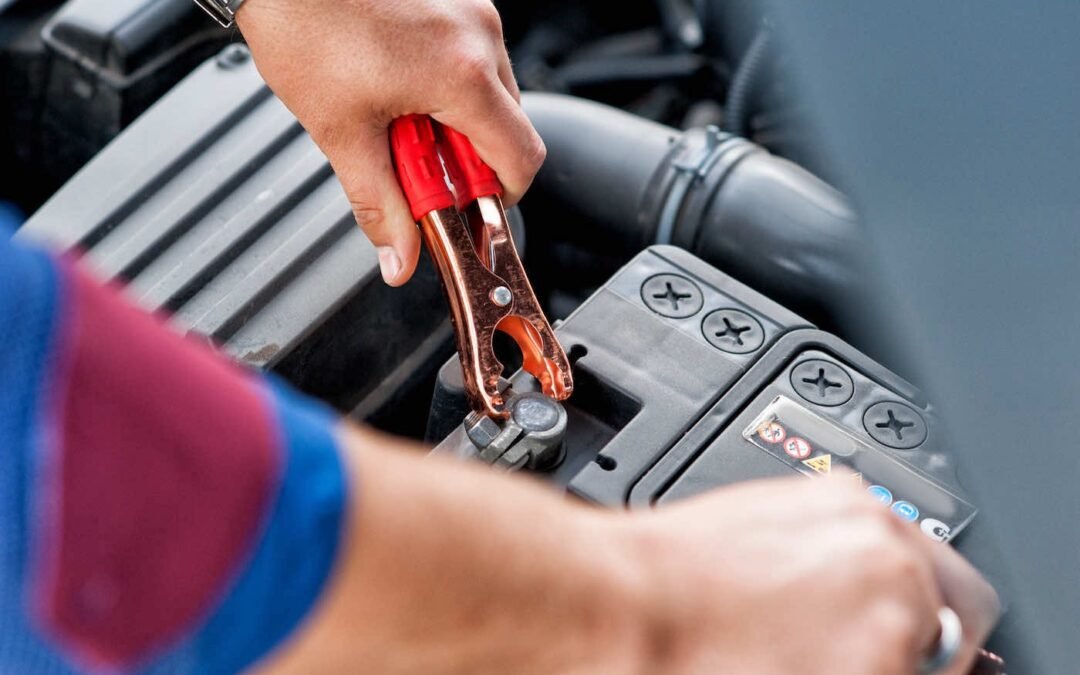
You turn the key, and instead of your engine roaring to life, you hear nothing—or worse, a slow clicking sound. Your car battery has died in the middle of a Quebec winter, and you’re stuck in freezing temperatures. This is one of the most common winter emergencies facing Quebec drivers, but it’s also one of the most preventable and fixable.
In this guide, you’ll learn exactly why car batteries fail in cold weather, how to safely jump start your vehicle, when to call for professional battery boost service, and how to prevent this frustrating situation from happening again.
Why Car Batteries Die in Quebec Winters
Cold weather is brutal on car batteries. When temperatures drop below freezing—which happens frequently in Quebec from December through March—your battery loses a significant portion of its cranking power just when your engine needs the most energy to start.
At -18°C, a typical car battery loses approximately 40% of its starting power. At -30°C—not uncommon during Quebec cold snaps—batteries can lose up to 60% of their capacity. Meanwhile, your engine oil thickens in extreme cold, requiring nearly twice as much power to turn the engine over compared to warm weather conditions.
This double challenge explains why batteries that work perfectly fine in September suddenly fail in January. Your battery hasn’t necessarily died—it’s simply unable to provide the enormous burst of energy needed to start a cold engine.
Common Causes of Winter Battery Failure
Several factors contribute to dead batteries during Quebec winters:
- Battery age: Batteries older than 3-4 years are significantly more vulnerable to cold weather failure
- Short trips: Quick drives don’t give your alternator enough time to fully recharge the battery
- Electrical drain: Leaving lights, radio, or accessories on drains batteries faster in cold temperatures
- Corrosion: Corroded battery terminals create resistance that prevents proper charging
- Parasitic drain: Modern vehicles with computers, alarms, and electronics slowly drain batteries even when parked
- Low electrolyte levels: Batteries with insufficient fluid levels freeze more easily and lose capacity
- Weak alternator: A failing alternator can’t keep the battery charged, leading to dead batteries overnight
Understanding these causes helps you take preventive action before you’re stranded in a parking lot at -25°C.
Signs Your Battery Is About to Fail
Most batteries don’t die without warning. Watch for these early signs that your battery is struggling:
- Engine cranks slowly, especially on cold mornings
- Headlights dim when the engine is idling
- Dashboard lights flicker or dim while starting
- Battery warning light appears on your dashboard
- You need frequent jump starts
- Electrical accessories (radio, power windows) work sluggishly
- The battery case appears swollen or bloated
- You smell a sulfur or rotten egg odor near the battery
- White or blue corrosion appears on battery terminals
If you notice any of these symptoms, have your battery tested immediately. Most auto parts stores and repair shops offer free battery testing—a service that takes just minutes but can prevent you from being stranded. Alternatively, call us at (418) 476-1522 and we can test your battery on-site.
How to Jump Start Your Car Safely in Winter
If your battery dies and you have jumper cables and access to another vehicle, you can attempt a jump start yourself. Follow these steps carefully—incorrect jump starting can damage both vehicles’ electrical systems or even cause battery explosions.
What You’ll Need
- Quality jumper cables (at least 4-6 gauge thickness for cold weather)
- Another vehicle with a fully charged battery
- Clear access to both batteries
- Safety glasses (recommended to protect from sparks)
Step-by-Step Jump Starting Instructions
Step 1: Position the Vehicles
Park the working vehicle close enough that your jumper cables can reach both batteries comfortably, but make sure the vehicles aren’t touching. Turn off both vehicles completely and engage the parking brakes.
Step 2: Identify Battery Terminals
Open both hoods and locate the batteries. Identify the positive (+) terminal, usually marked in red, and the negative (-) terminal, marked in black. Clear away any snow, ice, or corrosion from the terminals before connecting cables.
Step 3: Connect the Cables in the Correct Order
This sequence is critical for safety:
- Connect one red clamp to the positive (+) terminal of the dead battery
- Connect the other red clamp to the positive (+) terminal of the good battery
- Connect one black clamp to the negative (-) terminal of the good battery
- Connect the other black clamp to an unpainted metal surface on the dead vehicle’s engine block—NOT directly to the negative battery terminal (this prevents sparks near battery gases)
Step 4: Start the Working Vehicle
Start the vehicle with the good battery and let it run for 2-3 minutes at slightly elevated RPMs (around 1,500-2,000). This charges the dead battery and increases the alternator’s output.
Step 5: Attempt to Start the Dead Vehicle
Try starting the vehicle with the dead battery. If it doesn’t start immediately, wait another 2-3 minutes and try again. If it doesn’t start after several attempts, your battery may be completely dead or there may be another issue—call for professional help at (418) 476-1522.
Step 6: Remove Cables in Reverse Order
Once the dead vehicle starts, remove the cables in exactly the reverse order you connected them:
- Remove the black clamp from the engine block
- Remove the black clamp from the good battery
- Remove the red clamp from the good battery
- Remove the red clamp from the formerly dead battery
Step 7: Keep the Vehicle Running
Don’t turn off your vehicle immediately after jump starting. Drive for at least 20-30 minutes (longer in extreme cold) to allow your alternator to recharge the battery. Avoid using electrical accessories like heated seats, radio, or defrosters during this time—let the alternator focus entirely on charging the battery.
Important Safety Warnings
- Never let the jumper cable clamps touch each other while connected to a battery
- Don’t jump start a battery that’s frozen solid (the case will be swollen or icy)—frozen batteries can explode
- Keep sparks, flames, and cigarettes away from batteries—they emit flammable hydrogen gas
- Wear safety glasses if possible to protect from potential sparks or acid spray
- If you’re unsure about any step, call for professional battery boost service instead
When to Call for Professional Battery Boost Service
While jump starting yourself can work, many situations require professional assistance. Call Quebec Remorquage’s 24/7 battery boost service at (418) 476-1522 if any of these apply:
- You don’t have jumper cables or another vehicle available
- You’re alone in an isolated or dangerous location
- Temperatures are extreme (-25°C or colder)
- Your battery appears frozen, swollen, or damaged
- You smell sulfur or see battery acid leaking
- Jump starting attempts have failed multiple times
- You’re uncomfortable working with electrical systems
- You’re on a busy highway or in traffic
- Weather conditions are dangerous (snowstorm, whiteout)
- You need to get somewhere urgently (work, medical appointment)
Our professional battery boost service includes high-output commercial jump starters that work reliably even in Quebec’s coldest temperatures. We’ll also test your battery and alternator on-site, letting you know whether you need a replacement or if your battery will hold a charge.
We serve all Quebec areas including Limoilou, Beauport, Sainte-Foy, Charlesbourg, and surrounding neighborhoods—usually arriving within 30 minutes.
Boost vs. Replace: Should You Replace Your Battery?
A successful jump start doesn’t always mean your battery is fine. Use this decision guide to determine whether boosting or replacing is the right choice:
When Boosting Is Enough
- Your battery is less than 3 years old
- This is the first time it’s died this season
- You accidentally left lights or accessories on
- Extreme cold hit suddenly after your car sat unused for days
- The jump start worked quickly and the vehicle ran normally afterward
When You Need a New Battery
- Your battery is 4-5 years old or older
- You’ve needed multiple jump starts within a week or two
- The battery doesn’t hold a charge even after extended driving
- Your engine cranks slowly even after a boost
- The battery case is swollen, cracked, or leaking
- Heavy corrosion repeatedly forms on terminals
- A professional battery test shows it’s below 12.4 volts when fully charged
Don’t take chances with an unreliable battery during Quebec winters. The cost of a new battery is far less than being stranded repeatedly or risking a breakdown in dangerous conditions.
How to Prevent Dead Batteries in Winter
Prevention is always better than dealing with a dead battery at -20°C. Follow these tips to keep your battery healthy through Quebec’s harsh winters:
Before Winter Arrives
- Test your battery in November: Have it tested before temperatures drop—most failures happen suddenly
- Replace aging batteries proactively: If your battery is 3+ years old, replace it before winter
- Clean terminals thoroughly: Remove all corrosion using a wire brush and baking soda solution
- Check the alternator: Ensure it’s charging properly (should read 13.7-14.7 volts while running)
- Inspect battery cables: Replace any that are frayed, cracked, or loose
During Winter Months
- Drive regularly: Take your vehicle out at least once every 2-3 days for 20+ minutes
- Park in a garage if possible: Even an unheated garage is warmer than outdoor temperatures
- Use a battery blanket or heater: These devices keep batteries warm overnight in extreme cold
- Turn off all accessories before turning off the engine: Lights, radio, heater, etc.
- Avoid short trips only: Quick errands don’t give the alternator time to recharge the battery
- Don’t let your gas tank drop below half: Extra fuel adds weight and provides ballast
- Consider a trickle charger: If your vehicle sits unused, a battery maintainer prevents discharge
Choose the Right Battery for Quebec
Not all batteries are created equal for cold weather. When replacing your battery, look for:
- High Cold Cranking Amps (CCA): Choose batteries with CCA ratings of 600+ for Quebec winters
- Fresh manufacturing date: Batteries lose capacity sitting on store shelves—check the date code
- Warranty coverage: Quality batteries offer 3-5 year warranties with free replacement periods
- Proper fit: Ensure the battery is the correct size and type for your specific vehicle
What If Your Battery Keeps Dying?
If your battery dies repeatedly even after jump starts or replacement, there’s likely an underlying problem:
- Failing alternator: Not charging the battery properly while driving
- Parasitic electrical drain: Something in your vehicle is drawing power when it’s off (faulty module, interior light, aftermarket accessories)
- Corroded connections: Poor electrical connections prevent proper charging
- Bad starter motor: Drawing excessive power and draining the battery
- Loose or damaged serpentine belt: Prevents alternator from turning efficiently
These issues require professional diagnosis and repair. If you’re experiencing repeated battery problems, we can provide emergency towing to your preferred Quebec mechanic for proper diagnosis.
How Quebec Remorquage’s Battery Boost Service Works
When you call us for battery assistance, here’s exactly what happens:
- Immediate dispatch: We answer 24/7 and send the nearest truck to your location right away
- Fast arrival: Most battery boost calls are answered within 20-30 minutes across Quebec
- Professional assessment: Our operator inspects your battery, terminals, and connections
- High-power boost: We use commercial-grade jump starters that work reliably in extreme cold
- Battery testing: We test voltage, charging system, and battery health on-site
- Expert advice: We let you know if your battery is healthy or needs replacement
- Optional services: If needed, we can tow you to a parts store or repair shop
Our service vehicles carry everything needed for winter battery emergencies, including replacement batteries if you need one immediately.
Dead battery right now? Call (418) 476-1522 for fast battery boost service anywhere in Quebec—24/7/365.
Frequently Asked Questions
How long does a car battery last in Quebec winters?
Car batteries typically last 3-5 years, but Quebec’s extreme cold can shorten this to 3-4 years. Cold weather puts extra stress on batteries, reducing their lifespan compared to warmer climates. Have your battery tested annually after it reaches 3 years old, and consider proactive replacement before winter if it shows signs of weakness.
Can I jump start a completely frozen battery?
No—never attempt to jump start or charge a frozen battery. Frozen batteries can explode when electrical current is applied, causing serious injury and damage. If your battery case appears swollen, icy, or frozen solid, call for professional help. The battery will need to thaw in a warm environment before it can be tested or replaced.
How long should I drive after a jump start?
Drive for at least 20-30 minutes after a jump start, and longer in extreme cold temperatures. Highway driving at consistent speeds is ideal because it keeps your alternator running at optimal charging levels. Avoid short trips or stop-and-go traffic immediately after a jump start, as these don’t provide sufficient charging time.
Why does my car battery die overnight in winter?
Overnight battery death in winter usually indicates one of three problems: an aging battery that can’t hold a charge in cold temperatures, a parasitic electrical drain from something drawing power when the vehicle is off, or a failing alternator that isn’t fully charging the battery during driving. Have your charging system professionally tested to identify the cause.
How much does battery boost service cost in Quebec?
Battery boost service in Quebec typically starts around $99 for basic roadside assistance. Pricing depends on your location, time of day, and whether additional services like battery testing or towing are needed. Call us at (418) 476-1522 for an upfront quote with no hidden fees.
Can cold weather permanently damage my battery?
Extreme cold doesn’t permanently damage a healthy battery, but it does temporarily reduce its capacity. However, if a battery freezes solid due to low charge levels, the internal plates can be permanently damaged. This is why maintaining a fully charged battery throughout winter is critical—fully charged batteries resist freezing even at -40°C.
Should I idle my car to keep the battery charged in winter?
Idling isn’t an effective way to charge your battery. Your alternator produces minimal charging power at idle RPMs, and you’ll burn fuel without gaining much battery charge. Instead, drive your vehicle regularly for 20+ minutes at highway speeds, which produces optimal alternator output and properly recharges the battery.
What’s the difference between cold cranking amps and regular amps?
Cold Cranking Amps (CCA) measure how much power a battery can deliver at -18°C for 30 seconds while maintaining at least 7.2 volts. Regular amp-hour ratings don’t account for cold weather performance. For Quebec winters, choose batteries with CCA ratings of 600 or higher—the higher the CCA, the better the cold-weather starting power.
Stay Powered Up This Winter
A dead battery is one of Quebec’s most common winter emergencies, but it’s also one of the most preventable. Regular battery maintenance, proactive testing, and smart winter driving habits keep you on the road when temperatures plummet.
When prevention isn’t enough and your battery dies, you have options: jump start it yourself if you’re prepared and comfortable, or call Quebec Remorquage for professional battery boost service. We’re available 24/7 across all Quebec neighborhoods with fast response times and expert service.
Don’t let a dead battery leave you stranded in the cold. Keep our number saved in your phone, maintain your battery properly, and know that help is always just one call away.
Need a battery boost right now? Call (418) 476-1522 for immediate 24/7 service anywhere in Quebec. We’ll get you started and back on the road quickly and safely.
For other winter emergencies, we also provide complete roadside assistance, emergency tire changes, vehicle unlocking, and emergency towing throughout Quebec’s harsh winter season.